
White House Event Shooting Highlights Rising Political Violence in the U.S.
Intelligence Summary
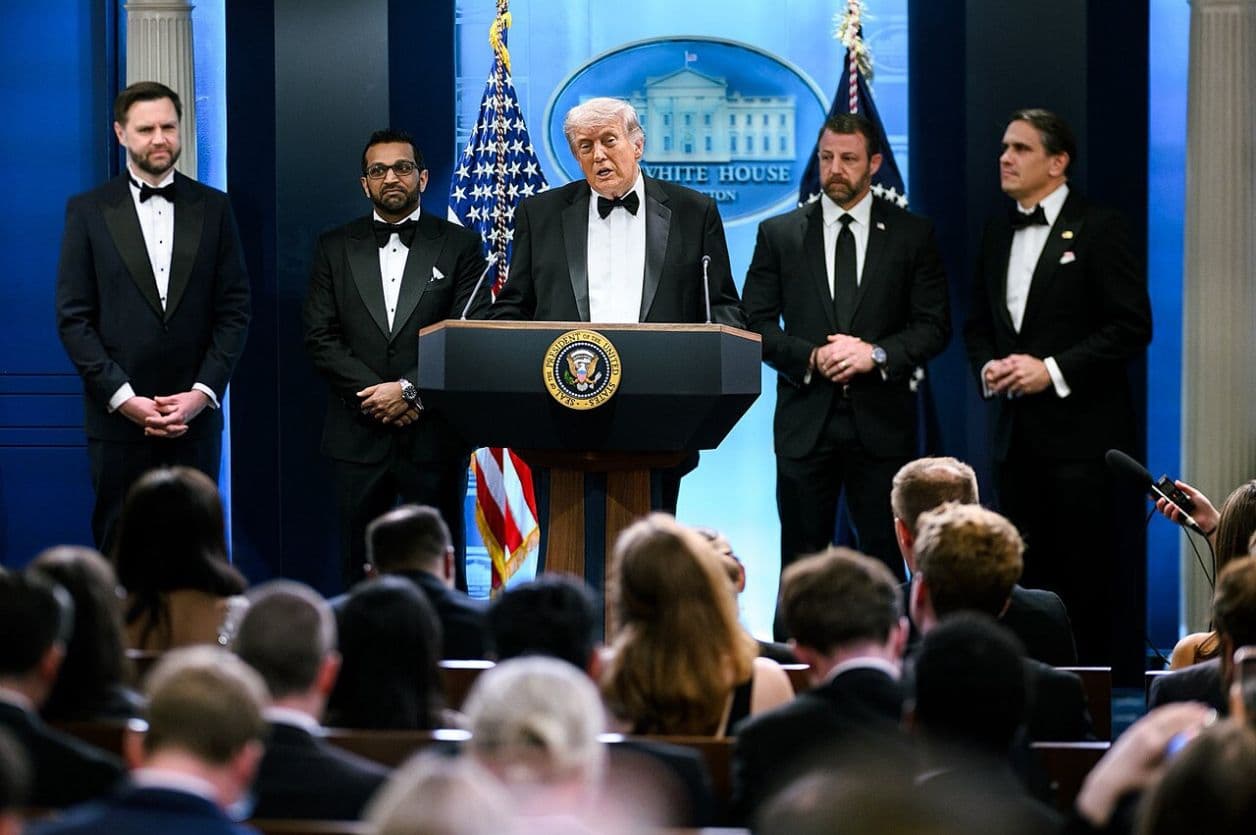
On April 27, 2026, a 31-year-old man identified as Cole Tomas Allen from Torrance, California, was charged in federal court in Washington, D.C., with the attempted assassination of U.S. President Donald Trump following a shooting incident at the annual White House Correspondents’ Association dinner. The attack occurred at the Washington Hilton hotel, where Trump, Vice President J.D. Vance, cabinet members, and senior officials were attending the gala. Allen allegedly attempted to breach a security checkpoint on the terrace level above the ballroom, carrying a semiautomatic handgun, a pump-action shotgun, and three knives. A Secret Service agent was shot in the chest but survived due to a ballistic vest, returning fire and subduing the suspect.
Federal prosecutors stated that Allen’s intent was to assassinate the president and as many senior cabinet officials as possible, citing a manifesto that listed targets in order of rank. Acting Attorney General Todd Blanche confirmed that Allen had traveled by train from California to Chicago and then to Washington, checking into the Hilton on April 24, one day before the event. The Justice Department charged him with attempted assassination and two firearms offenses, each carrying potential sentences of up to life imprisonment.
The White House described the incident as the third major assassination attempt against Trump since 2024, following previous attacks at a Pennsylvania rally and at his Mar-a-Lago resort. Press Secretary Karoline Leavitt attributed the violence to what she called a “left-wing cult of hatred” and announced that Chief of Staff Susie Wiles would convene a meeting with the Department of Homeland Security and the Secret Service to review presidential security protocols. Trump stated that he did not view the event as a security failure, emphasizing that the assailant was neutralized within moments.
The attack triggered immediate political fallout. Republican lawmakers renewed efforts to fund a $400 million White House ballroom project, arguing it would provide a secure venue for presidential events. Senator Lindsey Graham and other sponsors claimed the facility was necessary to prevent future breaches, while Democratic leaders, including Hakeem Jeffries and Chuck Schumer, criticized the proposal as a vanity project and urged focus on ending the Iran war and addressing domestic issues.
The shooting coincided with the arrival of King Charles III and Queen Camilla for a four-day U.S. state visit, the first by a British monarch in two decades. The visit, which included a planned address to Congress, was intended to repair transatlantic relations strained by the Iran conflict and Trump’s criticism of British Prime Minister Keir Starmer. Trump assured that the royal couple would be safe during their stay, as the White House and Secret Service reviewed security measures.
Public reaction reflected deepening polarization. Trump and First Lady Melania Trump publicly condemned late-night host Jimmy Kimmel for a parody aired days before the attack, which they claimed contributed to a culture of hostility. The White House’s framing of the incident as politically motivated further inflamed partisan divisions. Meanwhile, commentators noted that the attack reinforced a pattern of recurring political violence in the U.S., with Trump having survived three direct assassination attempts in two years.
The incident also intersected with broader political instability linked to the Iran war. Reports indicated that Trump’s coalition was fracturing, with polling showing only about one-quarter of Americans supporting the war and significant divisions within the Republican base. Congressional Republicans continued to back Trump’s foreign policy despite growing public opposition and concerns about his mental stability. Analysts compared the situation to the Vietnam era, suggesting that Congress retained the power to constrain presidential war-making but lacked the political will to do so.
Together, the attempted assassination, partisan blame, and legislative paralysis underscored a volatile domestic environment with global implications. The convergence of political violence, foreign war fatigue, and leadership strain created uncertainty about U.S. stability and its capacity to manage international crises.
Why it Matters
The attempted assassination of President Trump during a high-profile media event represents a critical inflection point in U.S. domestic security and global perception of American stability. The attack occurred amid an ongoing foreign war and deep partisan division, amplifying concerns about the resilience of U.S. democratic institutions and the reliability of its leadership in crisis. The convergence of political violence and foreign conflict mirrors historical moments when domestic unrest undermined U.S. strategic credibility abroad.
From a security perspective, the incident exposed vulnerabilities in presidential protection protocols. The fact that an armed assailant penetrated a security perimeter at a venue hosting the president, vice president, and cabinet members raises questions about interagency coordination and threat assessment. The White House’s decision to convene a review involving the Secret Service and Homeland Security indicates recognition of systemic gaps. However, the political framing of the attack as ideologically motivated risks politicizing security policy, potentially hindering objective threat analysis.
The domestic political response further illustrates the erosion of bipartisan consensus on national security. Republican lawmakers’ push to fund a $400 million White House ballroom as a security measure, juxtaposed with Democratic opposition citing misplaced priorities, reflects how even protective infrastructure has become a partisan battleground. This dynamic mirrors broader dysfunction in U.S. governance, where symbolic gestures often replace substantive policy reform.
Internationally, the timing of the attack during King Charles III’s state visit magnified its diplomatic significance. The British monarch’s trip was designed to repair strained U.S.-UK relations amid disagreements over the Iran war. The shooting, occurring just as the visit began, underscored the perception of a distracted and unstable Washington. Trump’s assurances of safety for the royal couple were necessary to maintain confidence among allies, but the optics of political violence in the U.S. capital inevitably raised concerns about the country’s internal cohesion and its ability to lead global coalitions.
The broader geopolitical implications are tied to the Iran conflict and the domestic backlash it has generated. Polling data showing that two-thirds of Americans oppose the war, combined with fractures within Trump’s own coalition, suggest that U.S. foreign policy is increasingly constrained by internal dissent. The assassination attempt, occurring against this backdrop, symbolizes the intersection of external overreach and internal volatility. As congressional Republicans continue to support the war despite public opposition, the U.S. risks repeating patterns of executive overreach and legislative complicity reminiscent of the Vietnam era.
For adversaries and allies alike, the incident signals instability at the heart of U.S. governance. Rivals such as Iran, Russia, and China may interpret the attack and its aftermath as evidence of declining American unity and deterrence credibility. Allies, particularly in Europe, may question Washington’s capacity to sustain coherent foreign policy amid domestic turmoil. The attack also highlights the growing role of political extremism and disinformation in shaping security threats, as the suspect’s alleged manifesto and ideological motivations reflect the fusion of personal grievance and political radicalization.
In strategic terms, the event underscores the feedback loop between domestic instability and global influence. Political violence erodes public trust, weakens institutional legitimacy, and constrains foreign policy flexibility. As the U.S. faces simultaneous crises—military conflict abroad, economic strain, and internal polarization—its ability to project stability and leadership diminishes. The attempted assassination of a sitting president during wartime thus becomes not only a national security incident but a geopolitical signal of vulnerability.
Stay Informed. Stay Ahead.