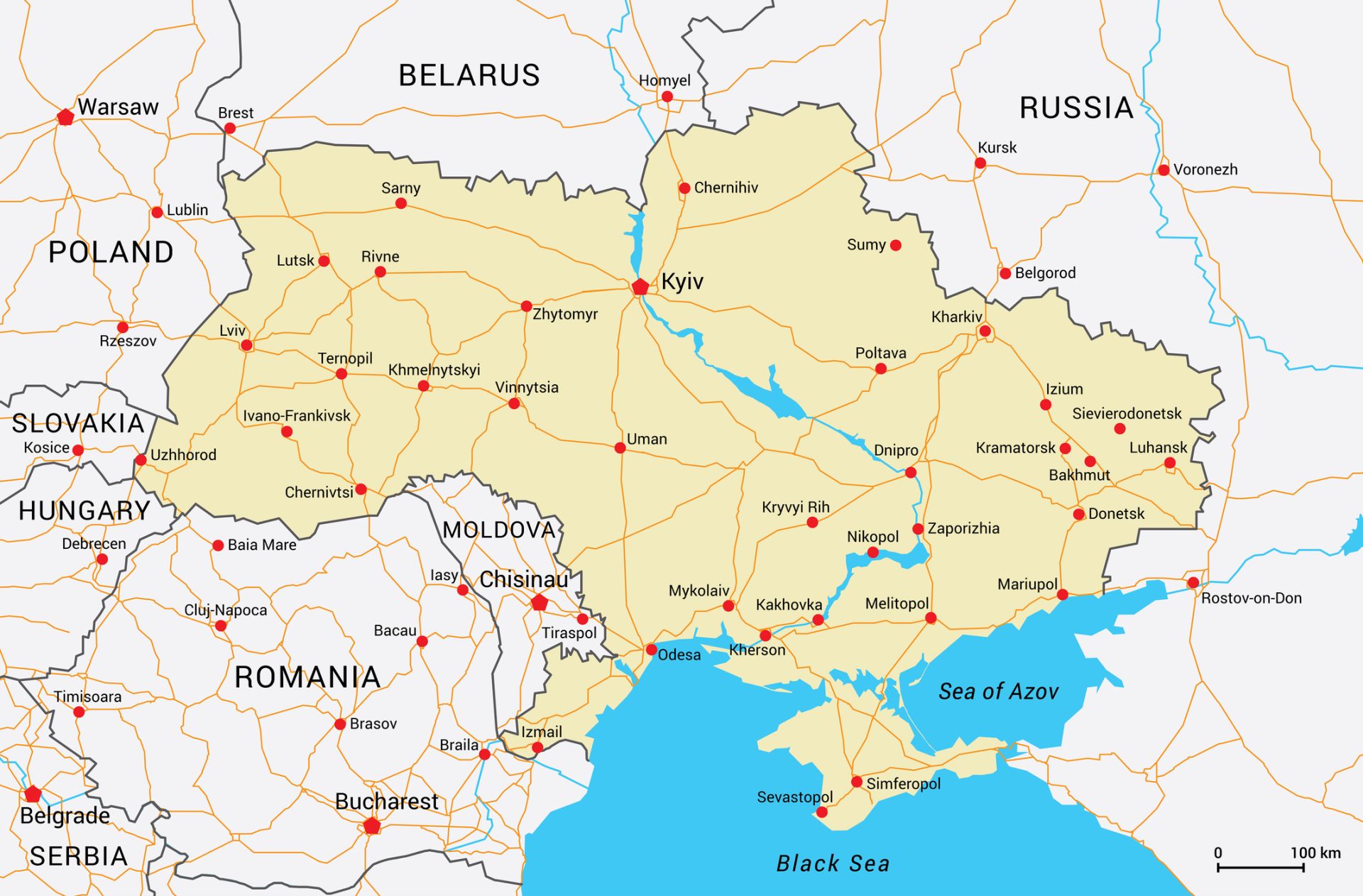
Between December 21 and 23, 2025, Russia launched one of its largest coordinated air assaults on Ukraine since the start of the full-scale invasion in 2022. Ukrainian officials reported that more than 600 drones and 30 missiles struck 13 regions. The attacks targeted energy infrastructure, forcing emergency power outages across the country as temperatures dropped below freezing. Prime Minister Yulia Svyrydenko stated that western Ukraine’s energy facilities were hit hardest, with restoration work underway amid widespread blackouts.
The strikes coincided with ongoing US-led peace negotiations in Miami involving Ukrainian, Russian, and European representatives. US President Donald Trump’s envoys, Steve Witkoff and Jared Kushner, met separately with delegations from Kyiv and Moscow to discuss revisions to a proposed ceasefire plan. Ukrainian President Volodymyr Zelenskyy described the talks as “quite solid,” claiming that nearly 90 percent of Ukraine’s demands had been incorporated into the draft, while Russian Deputy Foreign Minister Sergey Ryabkov characterized progress as slow. Kremlin spokesman Dmitry Peskov emphasized that the Miami meetings were a “working process” rather than a breakthrough.
Despite the diplomatic efforts, Russia intensified its attacks on Odesa, striking port facilities and vessels for the fifth consecutive day. Ukrainian Deputy Prime Minister Oleksii Kuleba said the strikes aimed to disrupt maritime logistics and energy infrastructure, leaving more than 120,000 residents without power. The Odesa region’s ports, including Yuzhny and Pivdenniy, suffered repeated damage, halting traffic on the Odesa–Reni highway and threatening grain exports through the Black Sea corridor.
Ukraine responded with cross-border strikes on Russian infrastructure. The Ukrainian General Staff reported attacks on an oil terminal in Russia’s Krasnodar region, damaging pipelines, piers, and two vessels, and causing fires over 1,500 square meters. Ukrainian forces also claimed sabotage at the Lipetsk-2 airfield, where Su-27 and Su-30SM fighter jets were reportedly set ablaze.
In Moscow, Lieutenant General Fanil Sarvarov, head of the Operational Training Directorate of the Russian Armed Forces’ General Staff, was killed by a car bomb on December 22. Russian investigators said Ukrainian intelligence services were among the suspected perpetrators. President Vladimir Putin was immediately informed of the incident, which marked the third assassination of a senior Russian officer in just over a year.
Meanwhile, Ukraine continued to innovate in air defense. Ukrainian forces deployed new low-cost interceptor drones, such as the Sting and Bullet models, capable of neutralizing Russian Shahed drones at a fraction of the cost of traditional systems. These interceptors, developed by domestic startups like General Cherry and Wild Hornets, were integrated into layered defense networks and are expected to form part of NATO’s planned “drone wall” along Europe’s eastern borders.
NATO announced the opening of a second logistics hub in Romania in January 2026 to double the flow of weapons and equipment to Ukraine. The hub will operate under NATO command, complementing the existing facility in Jasionka, Poland, which has handled over 220,000 tons of aid since 2022. The expansion aims to diversify supply routes and reduce dependence on a single corridor near the Polish border.