Ukraine Strikes Deep Into Russian Territory
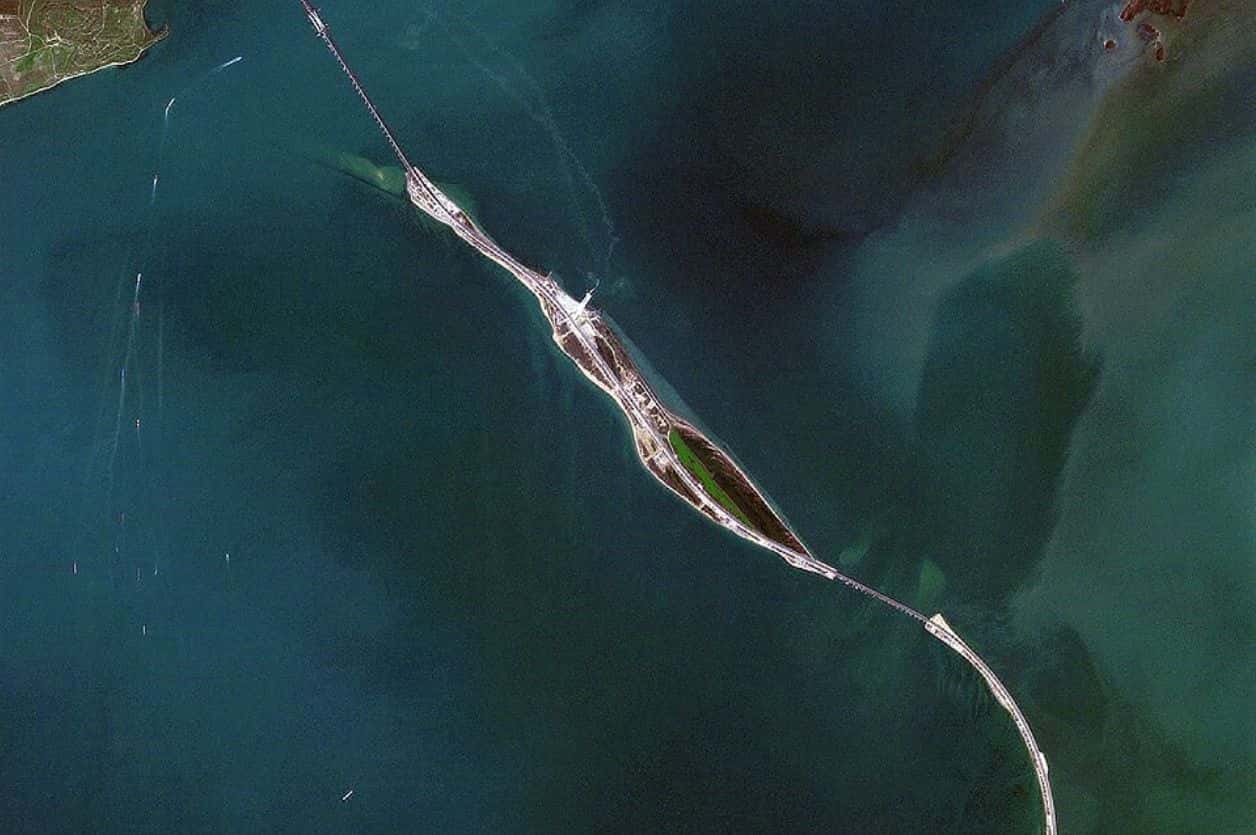
Credit: Copernicus Sentinel-2 imagery European Space Agency (ESA)
Intelligence Summary
Between June 21 and June 22, 2026, Ukrainian forces conducted a series of large-scale drone and missile strikes across Russian territory, including Moscow, Crimea, and multiple western and southern regions. Russia’s Ministry of Defense reported intercepting 301 Ukrainian drones over an 11-hour period, covering the Moscow, Voronezh, Bryansk, Krasnodar, and Crimea regions, as well as the Azov and Black Seas. Moscow Mayor Sergey Sobyanin confirmed that 84 drones were downed near the capital within 24 hours, prompting temporary suspension of operations at Sheremetyevo, Domodedovo, Vnukovo, and Zhukovskiy airports. The attacks coincided with Russia’s annual commemoration of the 1941 Nazi invasion, a date of high symbolic importance in Russian national memory.
Ukraine’s General Staff stated that its forces used air-launched cruise missiles to strike a missile electronics production facility in the Voronezh region and the Dubna satellite communications center near Moscow, describing both as critical components of Russia’s defense infrastructure. Voronezh Governor Alexander Gusev confirmed that a production plant was damaged and three people were injured, while local air defenses destroyed several high-speed targets. Heavy smoke was observed at the Dubna site, though the extent of damage remained under assessment.
In Crimea, Ukrainian drone attacks on June 21 killed four civilians and injured 28 others, according to Kremlin-appointed Governor Sergey Aksyonov. The strikes targeted an oil depot in Kerch and an oil terminal in Chushka, Krasnodar region, sparking fires and damaging maritime logistics facilities on both sides of the Kerch Strait. Following the attacks, Aksyonov ordered a halt to civilian gasoline sales, restricting fuel distribution to government agencies responsible for essential services and security. The suspension triggered widespread fuel shortages, with motorists in line for hours and speculators selling gasoline at double the market price. The Crimean administration described the situation as the worst energy crisis since Russia’s 2014 annexation of the peninsula.
Ukrainian President Volodymyr Zelensky stated that the strikes on Crimea and Krasnodar were part of Ukraine’s “long-range sanctions” campaign targeting Russian energy infrastructure, asserting that such operations were intended to weaken Russia’s war capacity. Ukrainian officials also claimed successful hits on four radar stations associated with S-400 air defense systems and two Pantsir systems in the same operation.
Russian retaliatory strikes continued across Ukraine. Russian strikes in Zaporizhzhia killed two people and injured seven, while an Iskander ballistic missile attack on Odesa killed one and injured three, igniting fires in fuel storage tanks.
Tensions expanded beyond the immediate battlefield when President Zelensky issued an ultimatum to Belarusian President Alexander Lukashenko, demanding the dismantling of communication towers along the 1,000-kilometer border that Ukraine alleged were aiding Russian drone coordination. Zelensky warned that Ukraine would target the towers if Belarus failed to act, while Lukashenko denied involvement in the conflict and accused Ukraine of attempting to drag Belarus into war. Belarusian Defense Minister Viktor Khrenin reiterated that Minsk would only enter the conflict if attacked first.
The escalation occurred as European leaders prepared to meet in Berlin on June 24 to discuss the conflict and NATO’s upcoming summit. German Chancellor Friedrich Merz was scheduled to host leaders from France, Britain, Italy, and Poland to coordinate responses to the intensifying hostilities.

Why it Matters
The June 2026 escalation demonstrates a significant evolution in Ukraine’s long-range strike capabilities and the widening geographic scope of the conflict. The use of over 300 drones and multiple cruise missiles in a single coordinated operation indicates a maturing Ukrainian capacity for deep-penetration attacks on Russian territory. These operations directly target Russia’s defense-industrial base, energy infrastructure, and logistical nodes, signaling a shift from tactical battlefield engagements to strategic disruption of Russia’s war economy. The strikes on Voronezh and Dubna highlight Ukraine’s intent to degrade Russia’s missile production and communications networks, while the attacks on Crimea and Krasnodar underscore the focus on energy chokepoints critical to sustaining Russian military operations.
The resulting fuel crisis in Crimea has both military and civilian implications. By forcing the suspension of civilian gasoline sales, Ukraine has effectively constrained Russian logistical flexibility in the peninsula, potentially limiting troop mobility and supply chain resilience. The Kremlin’s acknowledgment of the crisis suggests that Ukraine’s long-range campaign is achieving tangible strategic effects. However, the civilian toll and energy shortages also risk hardening Russian public sentiment and justifying further retaliatory escalation.
Zelensky’s ultimatum to Belarus introduces a new axis of potential confrontation. By threatening strikes on Belarusian infrastructure, Ukraine is signaling its willingness to expand the conflict’s geographic boundaries if Minsk continues to support Russian operations. This move carries high escalation risks, given Belarus’s hosting of Russian tactical nuclear weapons and its role as a logistical hub for Russian forces. Any Ukrainian strike on Belarusian territory could trigger a broader regional crisis involving NATO’s eastern flank, particularly Poland and the Baltic states.
The attacks also intersect with NATO-Russia competition. Ukraine’s ability to conduct deep strikes relies heavily on Western intelligence, satellite data, and drone technology transfers. This interdependence blurs the line between Ukrainian and NATO operational domains, increasing the risk of escalation between Russia and the Alliance. Russia’s framing of the attacks as Western-enabled aggression may serve as a pretext for retaliatory operations against NATO members.
Energy security remains a central dimension. The targeting of oil depots, refineries, and maritime terminals in Crimea and Krasnodar disrupts regional fuel flows through the Black Sea, potentially affecting global energy markets. The attacks on maritime logistics facilities near the Kerch Strait also highlight the vulnerability of critical chokepoints that connect Russian and occupied territories.
Diplomatically, the Berlin meeting of European leaders underscores the urgency of coordinating responses to the conflict’s intensification. The convergence of military escalation, energy disruption, and potential Belarusian involvement presents a complex challenge for NATO and the EU, requiring simultaneous management of deterrence, crisis communication, and humanitarian fallout.
Overall, the June 2026 escalation marks a transition toward a more technologically sophisticated and geographically expansive phase of the war. It underscores the growing integration of military, economic, and informational dimensions of conflict, where energy infrastructure, civilian resilience, and alliance coordination are as decisive as battlefield outcomes.
Stay Informed. Stay Ahead.