UK Political Crisis Converges with Hong Kong Sentencing
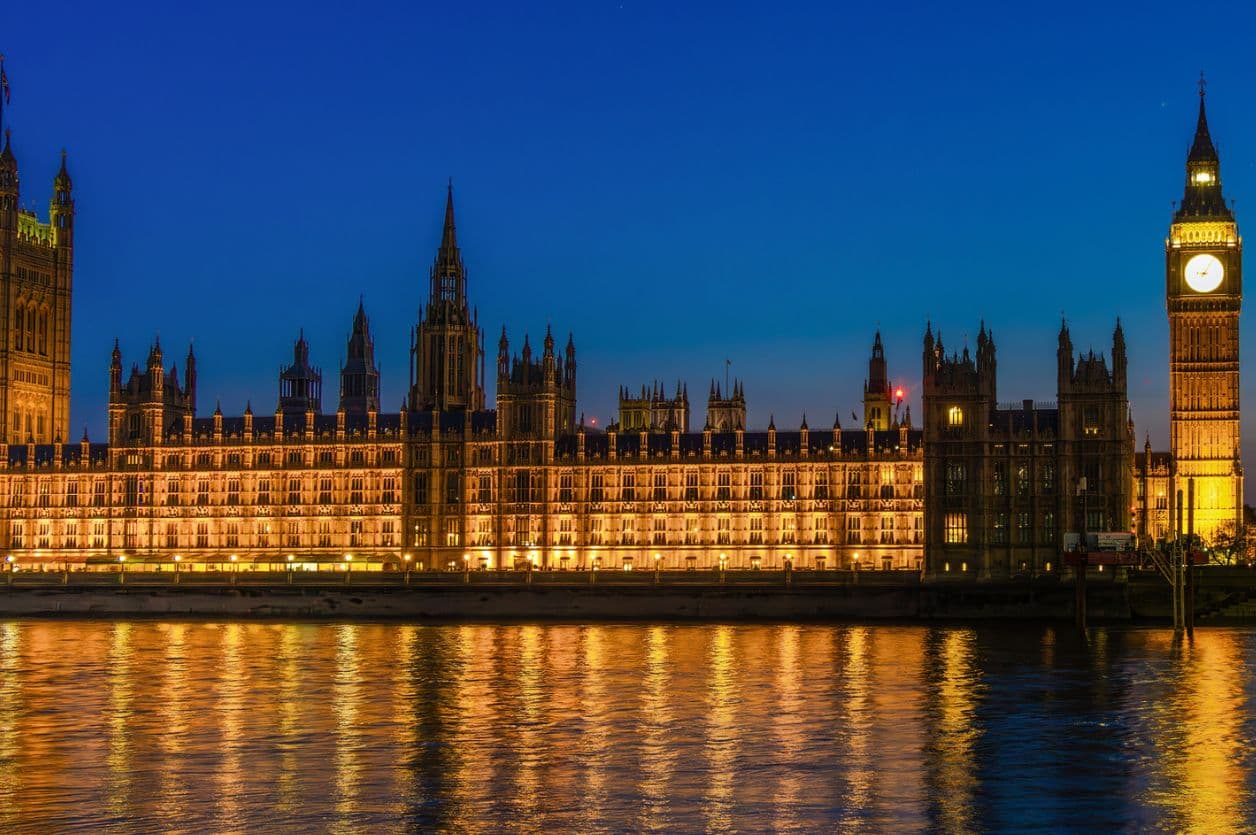
House of Parliament, London June 2025 Photo credit: iStockPhoto.com/David Taljat
Intelligence Summary
A political crisis in the United Kingdom intensified after new disclosures linked to the Jeffrey Epstein case further destabilized Prime Minister Keir Starmer’s government and triggered scrutiny of sensitive information handling at senior levels of the state. The account describes Starmer’s July 2024 general election victory as producing a large parliamentary majority despite a 33.7 percent vote share, which it characterizes as the lowest for any governing party on record, and frames the government as weakened by policy reversals and personnel turmoil. The same account states that Starmer lost his chief of staff, that his deputy prime minister was forced to quit, and that turnover in 10 Downing Street accelerated.
The crisis is tied to Starmer’s decision to appoint Peter Mandelson as ambassador to the United States, replacing Karen Pierce, who is described as having built strong bipartisan contacts in Washington. This was done despite internal preferences to extend Pierce’s tenure and despite other potential candidates cited as senior diplomats and political figures including David Miliband and George Osborne. The same account states that vetting for Mandelson’s appointment was not thorough and that concerns were set aside regarding Mandelson’s prior resignations during the Tony Blair era, his friendship with Jeffrey Epstein, and information described as attesting to his friendships with oligarchs. It further states that after the first tranche of Epstein files was published, Starmer was persuaded to remove Mandelson in September, and that a later tranche alleged Mandelson, while a minister under Gordon Brown, sent Epstein confidential economic information from within the UK government. According to reports, police are assessing whether criminal charges should be brought against Mandelson, and Parliament’s Intelligence and Security Committee was asked to investigate and is expected to release emails and text exchanges connected to the matter. Amid the fallout, McSweeney has quit, followed by the head of communications, described as the fourth Starmer communications chief in barely 18 months. Within hours of McSweeney’s departure, Anas Sarwar, identified as the leader of the Labour Party in Scotland, called on Starmer to step down. News coverage in London links the political crisis to upcoming May elections for local councils and devolved governments in Scotland and Wales, with pollsters predicting severe losses for Labour.
In parallel, Hong Kong’s national security enforcement produced a major international diplomatic dispute after media entrepreneur Jimmy Lai, age 78, was sentenced to 20 years in prison for national security offenses. Reporting states the sentence was imposed on Monday and is described as the harshest under Hong Kong’s National Security Law since it took effect in 2020. Lai was convicted late last year on two counts of conspiracy to collude with foreign forces and one count of conspiracy to publish seditious publications, and he pleaded not guilty. Another account describes the convictions as two counts of colluding with foreign forces and one count of sedition, tied to support for the 2019 protests and alleged lobbying of the United States to sanction Hong Kong leaders. Lai was sentenced alongside eight other defendants, including former employees of his now-defunct newspaper, Apple Daily, with prison terms reported as ranging from six to 10 years.
Hong Kong Chief Executive John Lee publicly praised the sentence, describing Lai’s conduct as severe wrongdoing and asserting the outcome demonstrated rule of law and justice. China’s Hong Kong and Macao Affairs Office said the verdict showed that those who challenge national security laws will be severely punished, and China’s State Council referenced Lai’s case in a report released Tuesday on Hong Kong’s national security situation. International reactions included UN Human Rights Commissioner Volker Turk stating the verdict should be quashed as incompatible with international law, and U.S. Secretary of State Marco Rubio and UK Foreign Secretary Yvette Cooper calling for Lai’s release on humanitarian grounds, with Cooper citing concern for Lai’s health. UK Home Secretary Yvette Cooper said the UK would rapidly engage further on Lai’s case and that the UK stands with the people of Hong Kong, and that Starmer raised Lai’s case with Chinese President Xi Jinping during a visit to Beijing. Reports claim Lai is a British citizen, and separately describes him as a dual UK and Hong Kong citizen. Lai’s legal team’s lead counsel, Caoilfhionn Gallagher, called for world leaders to act collectively to press for his release. Lai’s son Sebastien Lai and daughter Claire Lai described his health as deteriorating and characterized the sentence as effectively life-ending given his age.
Why it Matters
This development shows how domestic political shocks can rapidly become foreign-policy liabilities, especially when they intersect with intelligence oversight, diplomatic appointments, and adversarial narratives about governance and rule of law. In the UK case, the alleged transmission of confidential economic information by a senior former minister to Jeffrey Epstein, as described in the reporting, elevates the issue from reputational scandal to a potential national security and counterintelligence concern because it implies possible compromise of sensitive government material and raises questions about access controls, vetting, and institutional safeguards. The involvement of the parliamentary Intelligence and Security Committee, and the expectation that it may release communications connected to the affair, matters because it can force public disclosure of internal decision-making and expose additional officials. This could widen the crisis beyond one individual and constrain the government’s ability to project stability domestically and abroad.
The diplomatic consequences are immediate because the controversy is tied to the appointment of an ambassador to the United States, a role central to alliance management, trade, and security coordination. The description that Karen Pierce had cultivated strong bipartisan contacts, and that alternatives included senior diplomats and prominent political figures, underscores that the choice of envoy is not merely symbolic but a key instrument of statecraft. If the government is perceived as having conducted inadequate vetting for a top diplomatic post, it can weaken confidence among partners and complicate sensitive negotiations. Domestically driven leadership instability, including senior staff departures and calls for Starmer to step down, can also reduce policy continuity and slow decision cycles at moments when allies and adversaries closely watch for signals of resolve and coherence.
In Hong Kong, the Jimmy Lai sentencing illustrates how internal security policy becomes a direct driver of international friction, with legal outcomes triggering coordinated responses from foreign governments and the United Nations. The fact that the sentence is described as the harshest under the National Security Law since 2020, and that multiple defendants received lengthy prison terms, signals a deterrent posture aimed at media ecosystems and civil society, which invites external pressure framed in humanitarian and international-law terms. This matters geopolitically because it creates recurring points of contention in China’s relations with Western states, where individual cases can become bargaining issues, sanctions triggers, or agenda items in leader-level meetings, as indicated by reporting that Starmer raised Lai’s case with Xi Jinping in Beijing.
The two strands interact in a way that is consequential: the UK’s ability to sustain pressure or negotiate effectively on Hong Kong-related issues can be weakened if its own government is consumed by scandal and leadership uncertainty. Reporting explicitly links the Mandelson-Epstein scandal to reduced near-term hope for foreign governments to secure Lai’s release, suggesting that domestic political vulnerability can reduce diplomatic leverage at precisely the moment a government seeks to advocate for a citizen abroad. At the same time, Hong Kong authorities’ public celebration of the sentence and Beijing’s reaffirmation of national security framing indicate limited receptivity to external criticism, increasing the likelihood that disputes will persist.
Finally, the UK political turmoil described, including predicted electoral setbacks and constitutional strain implied by diverging political trajectories in Scotland, matters because internal fragmentation can reduce a state’s bandwidth for sustained international engagement. Even without additional claims, the combined picture is of domestic governance crises directly shaping diplomatic capacity, alliance signaling, and the effectiveness of international advocacy in contested legal and human-rights cases.
Key Actors
- United Kingdom
- UK Parliament Intelligence and Security Committee
- China
- United States
- United Nations
Stay Informed. Stay Ahead.