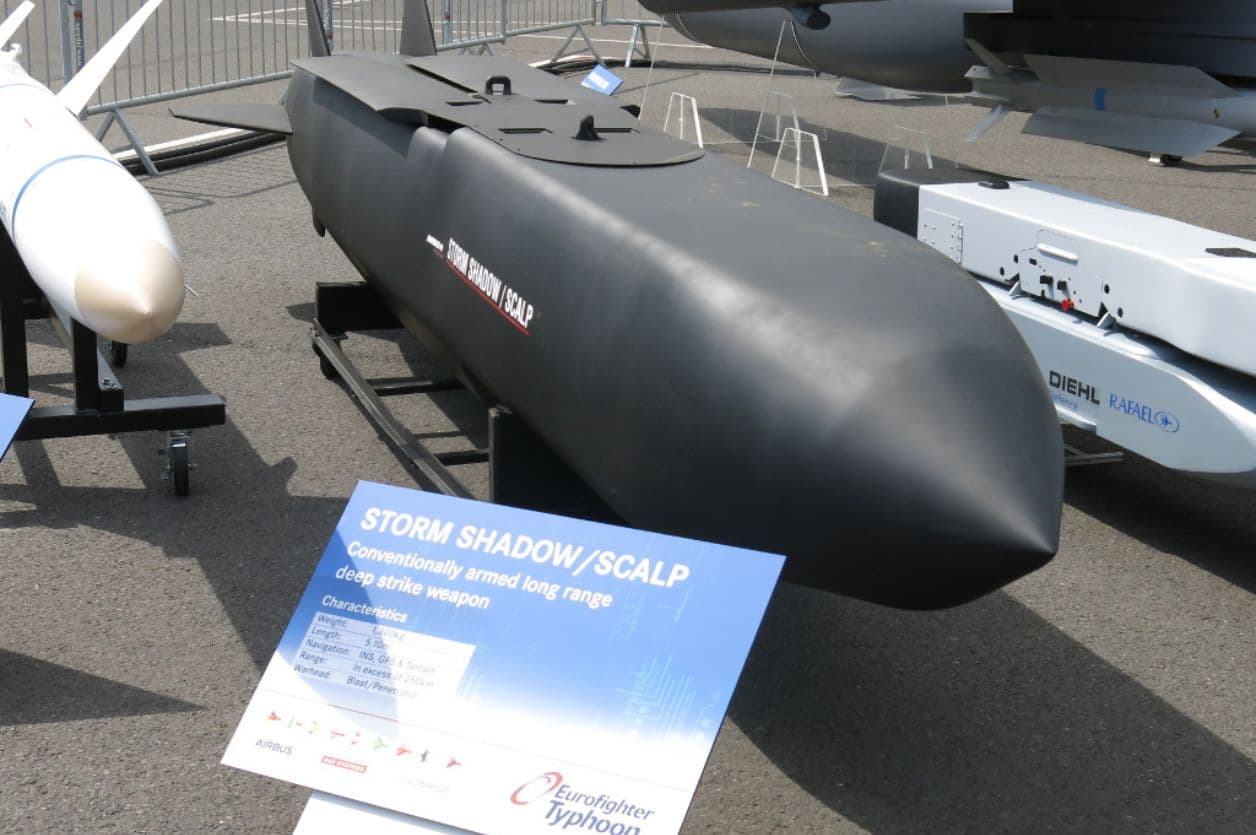
The transfer shifts British and French support from the provision of finished weapons toward transfer of production knowledge. That matters because Ukraine’s access to imported long-range systems has been constrained by the finite stocks, production capacity, and political decisions of its partners. Domestic assembly could eventually give Kyiv a more predictable supply of a high-precision strike weapon, allowing it to reserve scarce systems for hardened, strategically significant targets rather than rely primarily on less expensive drones. This would improve Ukraine’s ability to sustain deep strikes if assembly can be established at a meaningful scale.
The military effect is likely to be delayed rather than immediate. Ukraine already has an agile defense-industrial sector and produces indigenous long-range systems, but SCALP and Storm Shadow incorporate decades of Anglo-French research, specialized components, and complex manufacturing processes. A production line inside Ukraine would face supply-chain vulnerabilities and direct attack risk. Russian threats to target potential facilities reinforce that manufacturing security, dispersal, and access to critical components may become as consequential as the release of blueprints. The program’s practical value will depend on whether Ukraine can protect and sustain production.
The decision also reflects a widening European role in supporting Ukraine’s military self-sufficiency while US policy is described as less consistent. The contrast is particularly visible in Ukraine’s unresolved need for Patriot interceptors. British and French partners are prepared to share missile-production knowledge, but the United States has not agreed to transfer Patriot manufacturing technology. This does not make long-range strike systems a substitute for air defense, since the two capabilities address different operational problems. Instead, it could deepen a division of labor in which European states assume greater responsibility for enabling Ukrainian strike capacity while air-defense shortages remain an immediate constraint.
Russia’s response suggests that any Ukrainian production effort will be treated as a military target, increasing escalation and investment risk around facilities, logistics nodes, and foreign technical cooperation. At the same time, the policy gives London and Paris a way to support Ukraine’s ability to sustain operations without depending solely on repeated transfers of completed missiles. Key indicators will be whether a protected assembly arrangement is established, whether supply-chain and US technology-transfer issues are resolved, and whether Ukrainian-produced missiles enter service in quantities sufficient to affect target selection and Russian defensive planning.