
US–China Strategic Competition Deepens Across Multiple Fronts
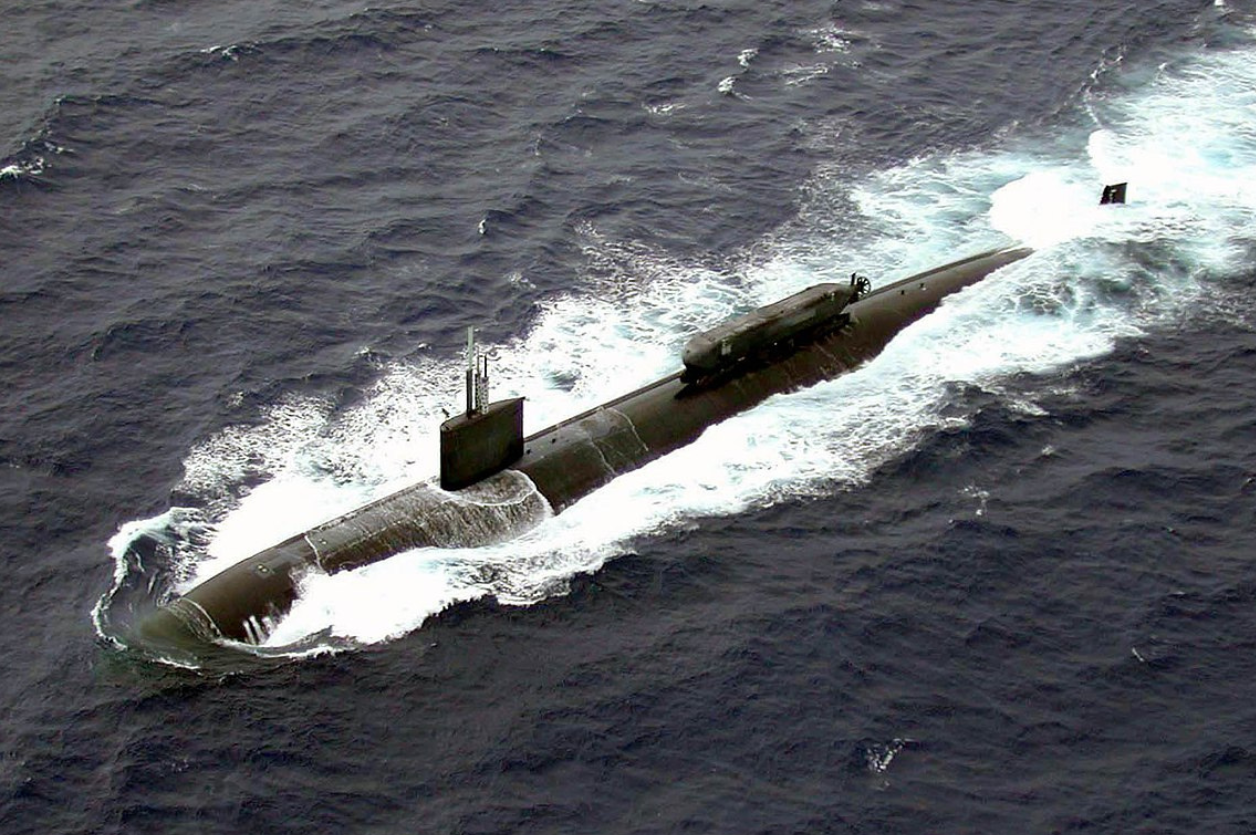
Photo credit: U.S. Navy
Intelligence Summary
In late December 2025, a series of interlinked developments underscored the deepening strategic, economic, and technological rivalry between the United States and China. The U.S. government announced an $11.15 billion arms package to Taiwan, the largest in history, including 82 High Mobility Artillery Rocket Systems, 420 Army Tactical Missile Systems, 60 self-propelled howitzers, drones, and missile refurbishment kits. The State Department stated that the sale would strengthen Taiwan’s defensive capabilities and regional stability, while Taiwan’s Defense Ministry expressed gratitude, noting that the package would help maintain deterrence in the Taiwan Strait. China’s Foreign Ministry condemned the sale, calling it a violation of diplomatic agreements and a threat to its sovereignty, warning that it would push the region toward confrontation.
The arms sale coincided with the arrival of the U.S. Navy’s nuclear-powered submarine USS *Greeneville* at Busan port in South Korea on December 23, 2025, marking the first such visit in ten months. The South Korean Navy described the port call as an opportunity to strengthen combined defense cooperation. The submarine’s presence followed a pattern of U.S. strategic signaling in the Indo-Pacific, reinforcing deterrence amid heightened tensions with China and North Korea.
Simultaneously, a congressional report in Washington accused China of exploiting U.S. Department of Energy-funded research to advance its military capabilities. The report identified over 4,300 academic papers co-authored by DOE-funded U.S. scientists and Chinese researchers between June 2023 and June 2025, with about half involving Chinese institutions linked to the People’s Liberation Army or the defense industry. The report concluded that U.S. taxpayer-funded research had been vulnerable to exploitation by China’s defense sector. The Department of Energy responded that it would review the findings and strengthen oversight. The Chinese Embassy in Washington rejected the report, calling it politically motivated and an attempt to obstruct normal scientific collaboration.
Trade tensions have also escalated. China’s Ministry of Commerce announced provisional tariffs of up to 42.7 percent on dairy imports from the European Union, citing alleged subsidies under the EU’s Common Agricultural Policy. The European Commission criticized the move as unjustified and said it would review the reasoning behind the decision. The tariffs followed earlier EU measures imposing duties of up to 45.3 percent on Chinese electric vehicles, prompting Beijing to retaliate with investigations into European brandy and pork imports.
In the technology sector, U.S. chipmaker Nvidia prepared to ship between 40,000 and 80,000 H200 artificial intelligence chips to China by mid-February 2026, following U.S. government approval that required a 25 percent surcharge. The chips, manufactured by Taiwan Semiconductor Manufacturing Company, were sought by major Chinese firms such as Alibaba and ByteDance for AI model training. However, the shipments awaited Beijing’s approval, with Chinese officials reportedly considering conditions requiring domestic chip bundling. The plan reflected the complex interplay between U.S. export controls and China’s efforts to expand domestic semiconductor production.
Meanwhile, TikTok has finalized agreements to form a new U.S.-based joint venture with Oracle, Silver Lake, and MGX, to ensure continued operation in the United States after Congress passed a law mandating divestment from its Chinese parent company, ByteDance. The new entity, scheduled to launch in January 2026, will have a majority-American board and store U.S. user data locally under Oracle’s management. ByteDance will retain a 19.9 percent stake, while U.S. investors will hold the remainder. The deal followed multiple executive orders by President Donald Trump extending TikTok’s operating deadline and aimed at addressing national security concerns over data access and algorithmic control.
Cyber and intelligence dimensions also featured prominently. Amazon reported blocking over 1,800 job applications from suspected North Korean agents attempting to infiltrate U.S. companies through remote IT positions. The company said the operatives used stolen identities and “laptop farms” to funnel earnings to Pyongyang’s weapons programs. U.S. authorities had previously uncovered 29 such operations nationwide, generating more than $17 million in illicit revenue.
Financially, China’s customs data showed record gold imports from Russia, totaling $961 million in November 2025 and $1.9 billion over the first eleven months of the year, nearly nine times the previous year’s value. Analysts suggested that actual purchases could be higher as China continues to diversify reserves away from the U.S. dollar. The transactions reflected deepening Sino-Russian economic cooperation, with most trade now conducted in rubles and yuan.
Finally, legal tensions persisted as China filed a lawsuit in the Intermediate People’s Court of Wuhan against the U.S. state of Missouri, demanding compensation of $50.5 billion and a public apology after Missouri sought to collect on a $25 billion U.S. court judgment related to the COVID-19 pandemic. The Chinese government argued that the case was politically motivated and outside U.S. jurisdiction, while Missouri officials described the countersuit as an attempt to delay enforcement.
Why it Matters
Together, these developments point to a U.S.–China rivalry that now extends well beyond trade, touching security, technology, and legal pressure. The $11.15 billion arms sale to Taiwan represents a significant escalation in U.S. commitment to Taipei’s defense, signaling a shift from symbolic support to operational deterrence. The inclusion of long-range missile systems and advanced drones mirrors U.S. assistance to Ukraine, suggesting a transfer of lessons from European to Indo-Pacific theaters. For Beijing, the sale reinforces perceptions of growing strategic pressure and external interference, likely prompting further military modernization and regional assertiveness.
The deployment of the USS Greeneville to South Korea reflects the U.S. strategy of forward deterrence, integrating nuclear-capable assets into alliance networks to counter perceived Chinese and North Korean threats. Such deployments serve dual purposes: reassuring allies and demonstrating readiness to project power across the Western Pacific. However, they also risk normalizing nuclear signaling in regional security dynamics, increasing the potential for miscalculation.
The congressional report on Chinese exploitation of U.S.-funded research highlights the growing securitization of scientific collaboration. The finding that half of the identified research involved Chinese military-linked institutions points to the blurred boundary between civilian and defense research in China’s system. The U.S. response, tightening oversight and restricting partnerships, reflects a broader decoupling trend in high technology, particularly in nuclear, quantum, and AI fields. This shift could fragment global research ecosystems and accelerate parallel innovation blocs.
China’s tariffs on EU dairy products demonstrate how trade disputes with the West are expanding beyond bilateral U.S.–China tensions into a wider contest over industrial policy and market access. The tit-for-tat pattern between Beijing and Brussels mirrors earlier U.S.–China tariff cycles, suggesting that China is willing to weaponize trade policy to counter perceived economic containment.
The Nvidia and TikTok cases reveal the complexity of economic interdependence amid strategic rivalry. Nvidia’s conditional approval to sell AI chips to China, coupled with Beijing’s potential restrictions, shows how both sides are balancing economic interests with national security imperatives. The TikTok restructuring, meanwhile, represents a precedent for forced technological decoupling through corporate reorganization, setting a model for future cases involving Chinese digital platforms.
The Amazon revelations show how North Korean cyber activity is becoming entangled with wider geopolitical rivalry. North Korea’s use of U.S. corporate infrastructure to fund weapons programs reflects vulnerabilities in global digital labor markets and the need for coordinated cybersecurity measures.
China’s record gold purchases from Russia and the near-total shift to ruble–yuan trade indicate a deliberate effort to build financial resilience against Western sanctions. This trend, if sustained, could erode the dominance of the U.S. dollar in bilateral trade and strengthen the economic foundation of the Sino-Russian partnership.
Finally, China’s lawsuit against Missouri exemplifies the extension of geopolitical rivalry into legal and symbolic domains. By challenging a U.S. state in its own courts, Beijing is asserting sovereignty and contesting narratives of culpability over the pandemic. The case also reflects how subnational actors, such as U.S. states, can become entangled in global disputes, complicating federal diplomatic management.
These developments point to a rivalry that has moved well beyond traditional military and trade competition. U.S.–China tensions now extend into technology governance, legal disputes, and information control, reflecting a broader contest over the rules, norms, and infrastructure that shape the global order.
Key Actors
- United States
- People’s Republic of China
- Taiwan
- European Union
- Russia
- North Korea
- South Korea
Stay Informed. Stay Ahead.