
U.S. China Rivalry Expands Across Supply Chains and Energy Security
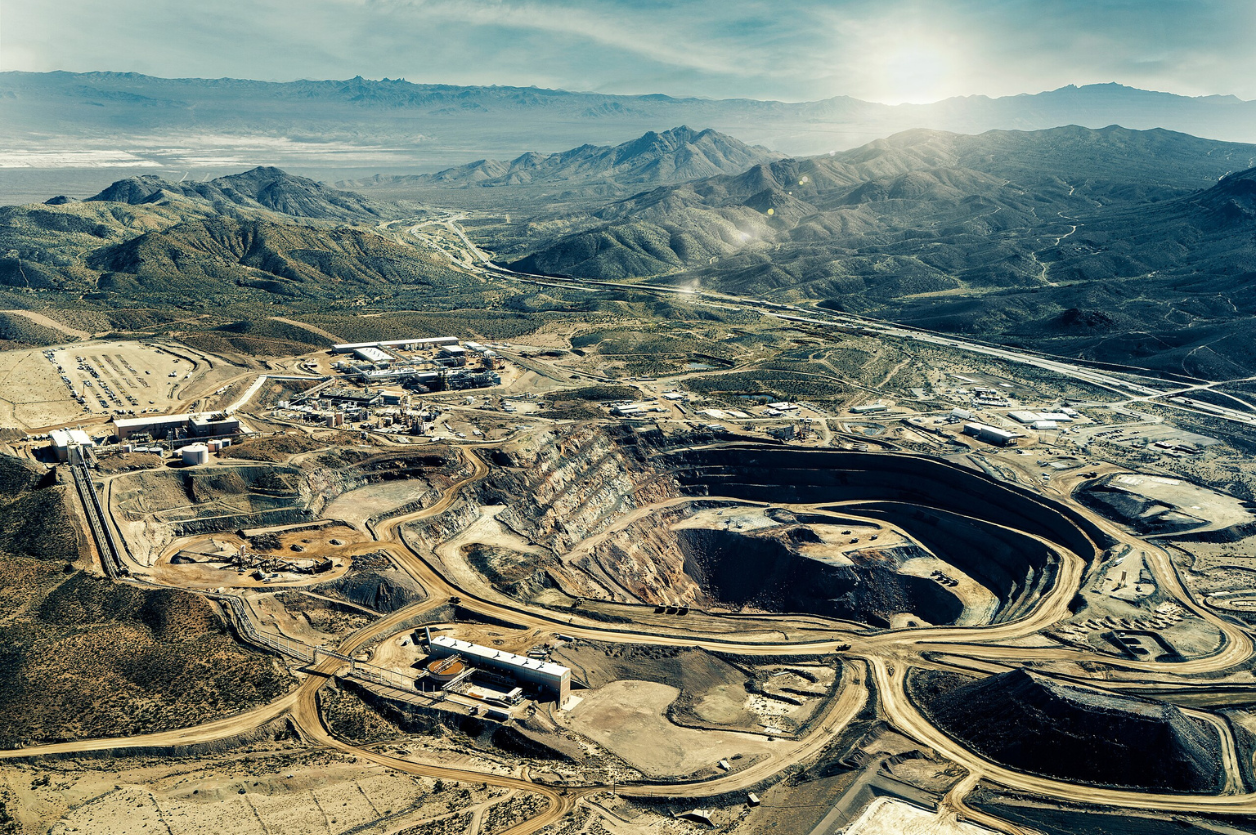
Photo credit: Tmy350
Intelligence Summary
U.S. efforts to reshape global supply chains are accelerating as competition with China deepens across industrial and resource sectors. During an October 2025 tour of Southeast Asia, U.S. President Donald Trump signed same-day agreements with Malaysian Prime Minister Anwar Ibrahim and Thai officials to expand cooperation on critical minerals and rare earth supply chains. The White House described these as efforts to strengthen exploration, extraction, and processing partnerships. Many analysts believe the agreement reflected Washington’s push to diversify supply chains away from China. Beijing currently mines about 70 percent of the world’s rare earths and controls roughly 90 percent of global processing capacity. Experts such as Marina Zhang of the University of Technology Sydney and Enrique Dans of IE Business School emphasized that China’s long-term engagement with resource-rich countries has allowed it to secure key chokepoints in the global minerals trade.
In parallel, the United States has moved to rebuild domestic refining capacity. Korea Zinc, the world’s largest zinc smelter, announced a $7.4 billion project in Tennessee backed by the U.S. government, likely to reduce reliance on Chinese mineral processing.The plan includes $4.7 billion in loans from U.S. financial institutions, $210 million in subsidies under the CHIPS and Science Act, and a 40 percent equity stake by the U.S. Department of Defense. The facility will produce 540,000 tonnes of nonferrous metals annually, including 300,000 tonnes of zinc, 35,000 tonnes of copper, 200,000 tonnes of lead, and 5,100 tonnes of rare earth minerals, with phased operations beginning in 2029. The project follows China’s December 2024 export ban on antimony and germanium, which are essential for telecommunications and military technologies. This ban was suspended in November 2025.
In the United States, several automakers are reassessing large-scale Electric Vehicle (EV) programs after sustained losses and shifting policy signals.Ford Motor Company announced a $19.5 billion write-down as it dismantled its flagship EV program, pivoting toward hybrid vehicles and grid-scale battery storage systems.The company has canceled three future EV programs, ended production of the F-150 Lightning, and dissolved its partnership with South Korea’s SK On. Ford’s new strategy includes plans to begin shipping 20 GWh of battery energy storage systems by 2027. The restructuring aims to restore profitability by 2029 after the EV division lost $5.1 billion in 2024, highlighting growing uncertainty around the commercial viability of large-scale EV investment in the U.S. market.
That uncertainty has been reinforced by shifts in U.S. electric vehicle policy under the Trump administration, which have altered long-term demand expectations and weakened investment confidence. The administration repealed Biden’s executive order that intended to accelerate EV adoption into the early 2030s, paused portions of federal EV infrastructure spending for review, and signaled a reduced emphasis on consumer EV incentives. While these actions did not dismantle statutory programs outright, they introduced regulatory ambiguity at a critical moment for automakers weighing capital-intensive electrification decisions. Industry analysts noted that the resulting policy volatility has created market hesitancy, encouraging firms to delay or scale back EV commitments in favor of nearer-term, lower-risk alternatives such as hybrids.
The consequences of this divergence are increasingly visible at the global level. Analysts noted that while 20 percent of global car sales were electric in 2024, China accounted for 11 million of the 17 million EVs sold, compared to 1.6 million in the United States. Sustained state support has enabled Chinese manufacturers to price low-emission vehicles below comparable petrol models domestically, reinforcing export competitiveness. By contrast, U.S. automakers, including Ford, have slowed or recalibrated EV strategies amid weaker demand signals and policy uncertainty. Analysts warned that a prolonged U.S. pullback could slow decarbonization efforts and reinforce oil dependence, while China continues to consolidate its position as the dominant global EV producer.
Together, these developments illustrate a strategic U.S.-China rivalry that encompasses resource security and industrial competition, and how domestic economic policies can explicitly impact international economic contests.
Why it Matters
The United States and China are both seeking to secure strategic autonomy across critical sectors, and are competing for the power and resources to do so. The United States’ agreements with Malaysia and Thailand and its investment in Korea Zinc’s Tennessee refinery demonstrate a deliberate effort to build a supply chain architecture that is independent of China’s dominance in the rare earths and critical minerals sector. This diversification strategy, backed by the Department of Defense, signals that Washington views mineral security as a national priority.
China’s control of over 90 percent of global rare earth processing capacity gives it leverage over industries essential to advanced weaponry, semiconductors, and renewable energy systems. The U.S. has responded with a massive state-backed investment and alliance-based resource diplomacy. However, the scale of China’s existing infrastructure and its established partnerships in the Global South mean that Washington’s efforts will take years to rebalance the supply chain landscape.
The rollback of U.S. EV policies further complicates this competition. By prioritizing fossil fuel industries, some analysts believe the Trump administration has conceded technological leadership in clean transportation to China. Ford’s $19.5 billion restructuring illustrates the broader recalibration of Western industry in response to market realities. The company’s pivot toward hybrid vehicles and grid-scale energy storage suggests that some U.S. manufacturers are prioritizing profitability and technological flexibility over EV programs, especially in the midst of shifting EV policy. This change may slow the pace of decarbonization but could strengthen U.S. industrial resilience by aligning production with consumer demand and infrastructure readiness.
Beijing’s dominance in EV production and battery technology not only strengthens its export position but also enhances its influence in emerging markets across Asia, Africa, and Latin America. The divergence in industrial strategies is apparent. China’s state-led green manufacturing versus the U.S.’s focus on fossil-fuel resurgence. The juxtaposition of these strategies could shape global energy markets and climate diplomacy for decades.
Taken together, these developments reveal a multipolar contest that extends beyond traditional military rivalry. The United States is constructing a network of economic and security partnerships to counter China’s structural advantages, while Beijing leverages its industrial capacity and regional influence to maintain strategic depth. The competition now spans energy security, supply chains, and the automotive industry, with each side testing the other’s capacity for sustained strategic endurance.
Key Actors
- United States
- China
- Malaysia
- Thailand
- South Korea
- Philippines
- India
Stay Informed. Stay Ahead.