Greenland Security Pact Nears Signature

Sep 22 / Steven A. Smith, PhD
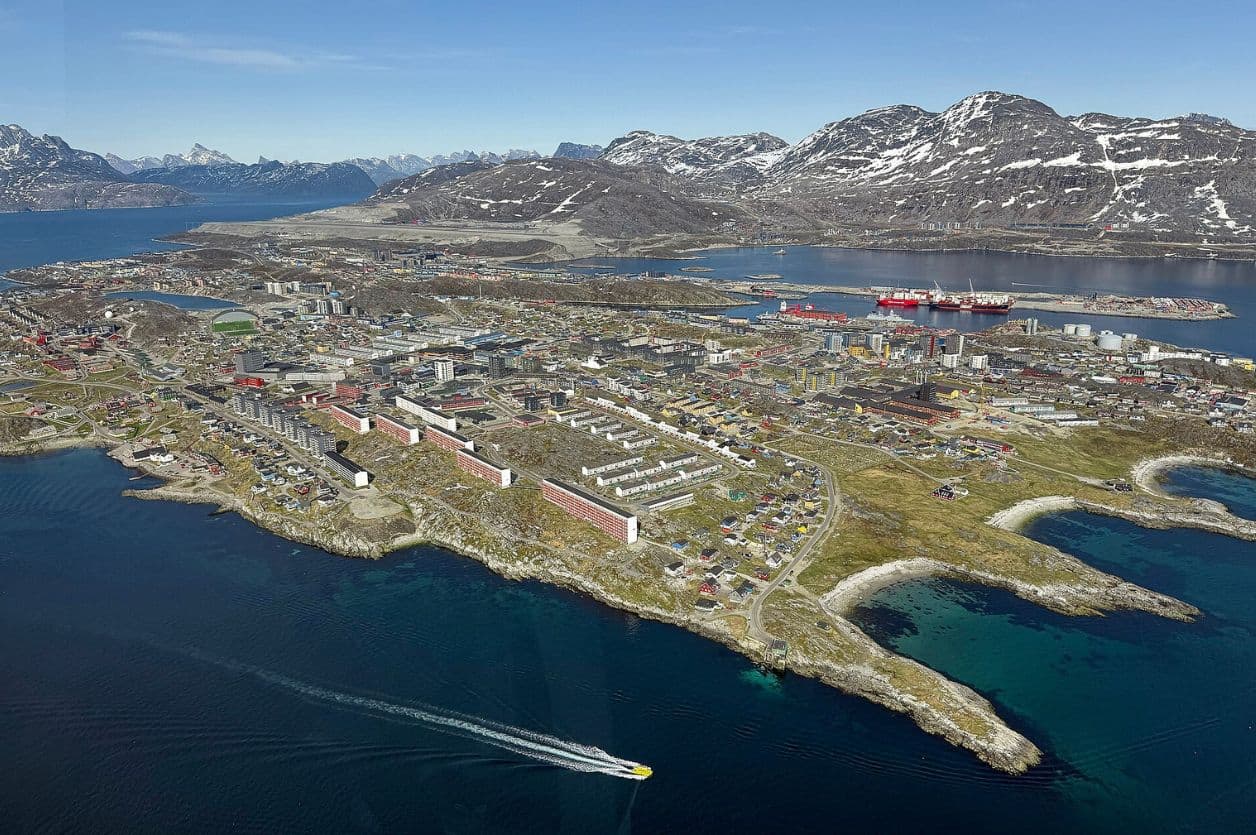
Aerial view of downtown Nuuk, Greenland. Photo credit: Quintin Soloviev

Intelligence Summary

The United States, Denmark, and Greenland have announced a prospective security agreement for Greenland, with formal signatures expected during the UN General Assembly session. Danish Prime Minister Mette Frederiksen and Greenlandic Prime Minister Jens-Frederik Nielsen said the arrangement would strengthen common security in the Arctic and North Atlantic while recognizing the sovereignty and territorial integrity of the Danish kingdom and Greenlanders’ right to self-determination. The agreement would still require parliamentary procedures before entering into force.


President Donald Trump presented the arrangement more expansively, saying it gave the United States permanent control over security and other needs in Greenland and would address U.S. concerns at no cost. This claim is materially broader than the Danish and Greenlandic description, which emphasizes sovereignty and self-determination. The precise text, allocation of authority, financial commitments, and procedures for implementation have not been made public.


According to the announced terms, the agreement would permit an expanded U.S. military presence, prohibit non-NATO states from establishing military outposts, and facilitate U.S. investment in Greenland. These details have not been independently elaborated by the Danish or Greenlandic governments. The United States already has a longstanding security relationship with Greenland under a 1951 agreement that allows it to construct or expand bases, leading critics to argue that the new deal may largely formalize or repackage existing arrangements rather than establish a fundamentally new U.S. role.


The agreement follows months in which Trump had raised the possibility of purchasing or annexing Greenland, portraying the territory as vulnerable to Russian and Chinese influence. Denmark, Greenland, European governments, and NATO members opposed an American acquisition. The new arrangement appears to have redirected the dispute from ownership toward a security framework accepted in principle by all three parties, pending signature and domestic approval.
Why It Matters

The agreement potentially provides a diplomatic off-ramp from a dispute that had placed unusual strain on relations between the United States and NATO partners. A framework that expands security cooperation while explicitly preserving Danish sovereignty and Greenlandic self-determination allows Washington to pursue a larger role without requiring territorial transfer. For Copenhagen and Nuuk, those provisions establish the political boundary within which further U.S. access and investment can be considered acceptable. Whether that balance holds will depend on the final text and parliamentary approval.


The reported ban on non-NATO military outposts would make alliance membership a formal condition for foreign military access to Greenland. This could narrow the scope for competing powers to establish a direct physical security presence on the island, while strengthening the United States' position as Greenland's principal external military partner. However, the practical effect remains uncertain because the public descriptions do not specify enforcement mechanisms, geographic coverage, or whether the provision applies only to new facilities.


The central strategic change may be more political than operational. The United States already possessed significant scope to expand facilities under the 1951 security arrangement. If the new agreement does not materially broaden access rights, basing authorities, or command arrangements, its immediate military impact could be limited. Its greater value would lie in reducing uncertainty over U.S. intentions after months of acquisition rhetoric and placing Arctic defense cooperation within a jointly accepted legal and alliance framework.


The investment component may also create a longer-term linkage between security policy and Greenland’s economic development. U.S. investment could deepen American influence if it proceeds, but it may also increase scrutiny in Greenland and Denmark over whether commercial arrangements and military expansion remain consistent with local political authority. The key indicators are the agreement’s published terms, the outcome of parliamentary procedures, the scale and character of any U.S. force expansion, and whether planned investments are specified in binding commitments rather than broad political language.

Stay Informed. Stay Ahead.

The global landscape changes daily, don't get left behind.
Thank you!