US Escalates Economic War on Iran's Trade Networks

Aug 25 / Steven A. Smith, PhD
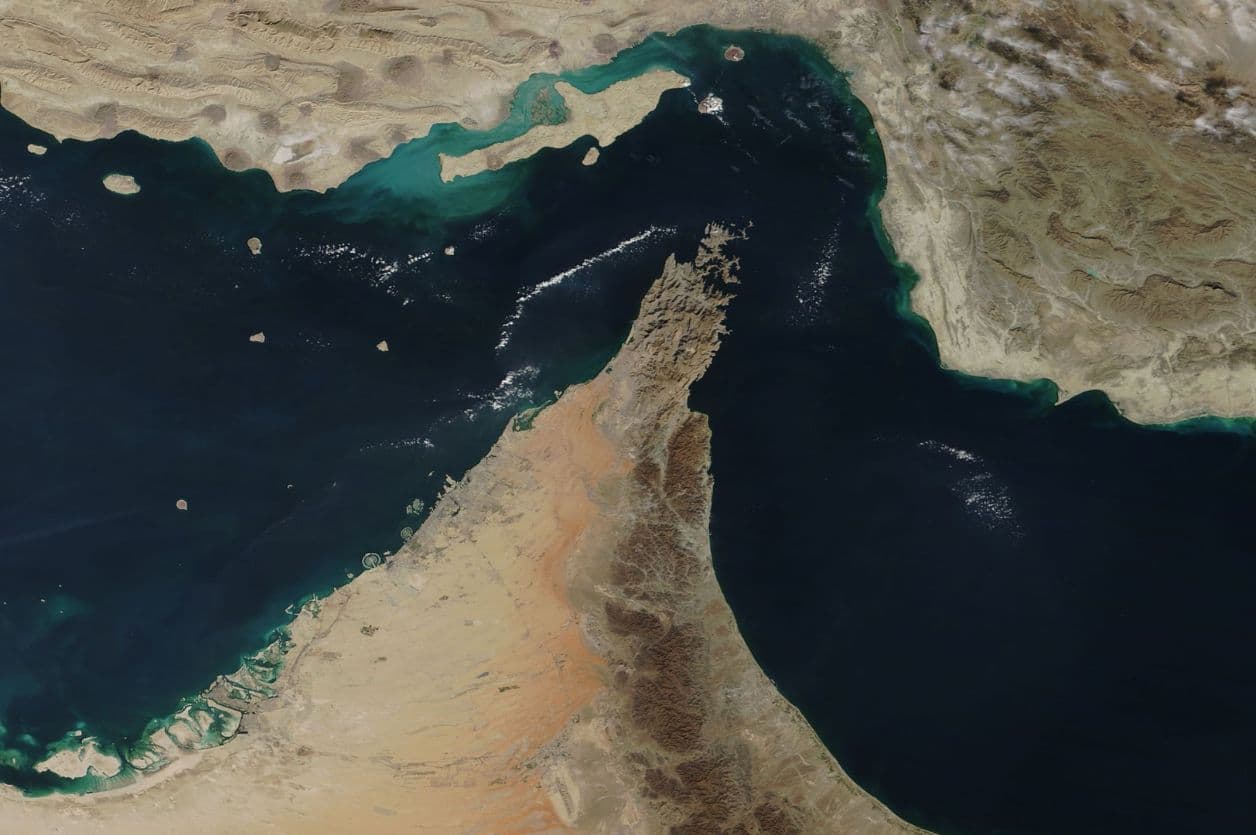
Strait of Hormuz. Photo credit: MODIS Land Rapid Response Team, NASA GSFC

Intelligence Summary

The Trump administration has announced Operation Economic Outcast, an expanded sanctions campaign intended to isolate Iran by targeting Iranian activity and foreign companies, vessels, financial channels, and governments that sustain Tehran's trade. Treasury Secretary Scott Bessent said the United States would pursue a zero-leakage approach against Iran's revenue streams and would require third parties to choose between commercial access to the United States and continued dealings with Iran. The immediate measures include Treasury determinations covering digital assets, technology, gold, aviation, and shipping, as well as sanctions on nearly 60 entities, individuals, and vessels in several jurisdictions, including China, Hong Kong, the United Arab Emirates, Singapore, and Switzerland.


The policy substantially expands the administration's threat of secondary sanctions, but its practical scope remains uncertain. Bessent said further measures would follow rapidly and that President Donald Trump was directly asking foreign leaders to end interactions with Iran. He did not identify which governments had accepted such requests or provide timelines for compliance. The UAE has announced a suspension of trade, commercial exchanges, and financial transactions with Iran, while China said it would protect its rights and maintained that sanctions were not a solution to the conflict. China is Iran's most important commercial partner; it accounted for approximately 90 percent of Iran's oil sales, according to the US Treasury Department, and reported nearly $10 billion in two-way trade with Iran in 2025, excluding an estimated $31.2 billion in Iranian oil shipments.


The sanctions initiative follows roughly six months of conflict between the United States, Israel, and Iran. Direct military strikes have paused, but efforts to end the conflict and negotiate Iran's nuclear program have stalled. Iran has effectively obstructed transit through the Strait of Hormuz, a route that normally carries about one-fifth of global oil and gas supplies, while the United States maintains a blockade of Iranian ports. Iranian officials rejected the new sanctions as repetitive and ineffective. Mohsen Rezaei, secretary of Iran's Supreme National Security Council, said Tehran would regard support for the US economic campaign as an act of war and warned that continued economic warfare could halt all oil exports from the Persian Gulf.
Why It Matters

The campaign shifts the central pressure point from Iran itself to the foreign commercial networks that enable Iranian trade. Because direct US-Iran economic ties are limited, the policy's effectiveness will depend on whether major trading partners and intermediaries judge the risk of US penalties greater than the benefit of continuing business with Tehran. Targeting shipping, gold, technology, and digital assets may increase the cost and complexity of sanctions evasion, particularly for firms seeking continued access to US markets and financial institutions. However, the announcement itself does not establish that Washington will impose penalties on the largest and most politically consequential actors.

China is the principal test of US resolve and the campaign's principal constraint. An approach that avoids major Chinese financial institutions or large purchasers of Iranian oil would leave a substantial channel for Iran's external earnings. Conversely, expansive measures against Chinese entities could trigger countermeasures from Beijing and complicate the administration's effort to stabilize relations before Trump's scheduled September 24 meeting with Chinese President Xi Jinping. This creates a structural tradeoff: broader enforcement could impose greater economic pressure on Iran, but also raises the diplomatic and economic costs for Washington.


The sanctions campaign also interacts directly with the unresolved Hormuz crisis. Iran's stated threat to disrupt oil exports beyond the strait raises the risk that coercive economic measures will be met with further pressure on Gulf energy flows rather than negotiations. The existing disruption has already contributed to higher oil prices. As a result, enforcement against Iran's trade partners could affect Iranian revenues and also shipping costs, energy markets, insurance risk, and commercial decision-making across the Gulf and Asia. Iran's ability and willingness to sustain disruption will be a key indicator of escalation risk.


The immediate strategic question is whether the campaign produces a viable diplomatic opening or hardens a cycle of reciprocal pressure. Tehran's leadership has publicly rejected capitulation, while President Masoud Pezeshkian has defended the June memorandum of understanding with Washington as a route out of the current impasse. The administration's leverage will therefore be measured less by the number of designations announced than by observable changes in Iranian oil exports, third-country compliance, access to payment and shipping networks, and progress toward renewed talks. If major trading partners preserve their economic ties, the policy may constrain Iran without delivering the political concessions Washington seeks.

Stay Informed. Stay Ahead.

The global landscape changes daily, don't get left behind.
Thank you!