Arctic Competition Intensifies Around Greenland
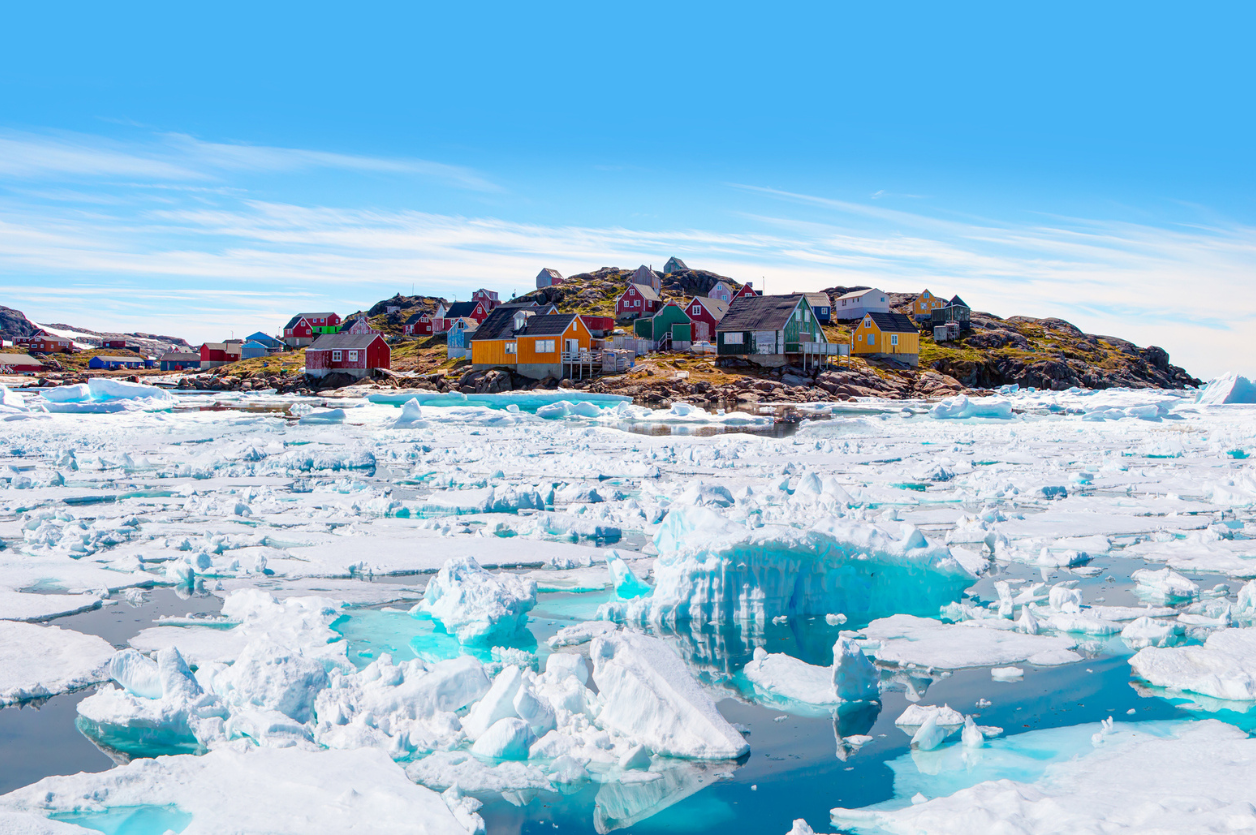
Photo credit: iStockPhoto.com/murat4art
Intelligence Summary
In early January 2026, the United States under President Donald Trump intensified efforts to bring Greenland under American control. The move was framed as a national security imperative to counter Russia and China in the Arctic. On January 12, 2026, Representative Randy Fine of Florida introduced the “Greenland Annexation and Statehood Act” in the House of Representatives, authorizing the president to take all necessary steps to annex or acquire Greenland and requiring a report to Congress on the process for its admission as a U.S. state. The bill followed Trump’s repeated public statements that the United States would take Greenland “one way or the other,” arguing that if Washington did not act, Russia or China would “take over” the island.
White House Press Secretary Karoline Leavitt confirmed that acquiring Greenland remained a presidential priority, though she did not specify a timeline. Reports indicated that Trump had instructed military commanders to prepare plans for a potential invasion, while also expressing a preference for a negotiated purchase. The administration’s rhetoric linked Greenland’s strategic value to its location along Arctic shipping lanes and its mineral wealth, particularly rare earth elements critical to advanced technologies.
Denmark and Greenland’s governments issued firm rejections of any U.S. takeover. Danish Prime Minister Mette Frederiksen described the situation as a “decisive moment” for transatlantic relations, emphasizing that Greenland’s future must be determined by its people and governed by international law. Greenland’s coalition government reiterated that the island’s defense would remain under NATO and that it would not accept U.S. control under any circumstance. Greenlandic Prime Minister Jens-Frederik Nielsen stated that the island’s government would intensify efforts to ensure its defense through NATO structures, following a joint declaration from France, Germany, Italy, Poland, Spain, and the United Kingdom affirming that only Denmark and Greenland could decide the island’s future.
European allies rallied behind Denmark. Germany, Sweden, and other European states condemned Washington’s threats, warning that a U.S. military seizure of Greenland would violate international law and could destroy NATO. NATO Secretary General Mark Rutte confirmed that the alliance was discussing “next steps” to strengthen Arctic security amid U.S. pressure, noting that all allies recognized the growing risks of Russian and Chinese activity as Arctic sea lanes opened. European Commissioner for Defence and Space Andrius Kubilius stated that the EU and NATO were prepared to enhance Greenland’s defense capabilities, including through troop deployments and anti-drone systems, but rejected any U.S. unilateral action.
Germany and the United Kingdom reportedly began drafting plans to expand NATO’s presence in Greenland to preempt U.S. unilateral moves. A German proposal, codenamed “Arctic Sentry,” envisioned a joint NATO mission involving military exercises, intelligence sharing, and potential troop deployments. British and German officials met with French counterparts to coordinate these measures, which were discussed at a NATO meeting on January 8, 2026. German Foreign Minister Johann Wadephul and U.S. Secretary of State Marco Rubio were scheduled to meet in Washington to discuss the issue, with Wadephul emphasizing that NATO allies must bear responsibility collectively for Arctic security.
China and Russia both criticized the U.S. approach. Beijing’s Foreign Ministry stated that the United States should not use China as a pretext for pursuing its own Arctic ambitions and called for respect for all countries’ rights to operate in the region under international law. Russian officials reiterated opposition to Arctic militarization, emphasizing that the region should remain a zone of peaceful cooperation.
Why it Matters
The U.S. campaign to assert control over Greenland represents a turning point in Arctic geopolitics, exposing the intersection of alliance cohesion and the militarization of climate-affected frontiers. The Trump administration’s framing of Greenland as a national security asset underscores the Arctic’s transformation from a peripheral region into a central arena of strategic competition. The island’s location between North America and Europe, its proximity to key maritime routes, and its mineral resources make it a focal point for U.S. efforts to counter Russian and Chinese influence. By linking Greenland’s status to deterrence against Moscow and Beijing, Washington effectively redefined Arctic governance as a zero-sum contest for control rather than cooperation.
The introduction of the Greenland Annexation and Statehood Act institutionalized this ambition within U.S. domestic politics, signaling a willingness to use legislative and potentially military means to alter territorial arrangements. This move challenged the post-World War II norms that underpin NATO and the broader international order, particularly the principle that alliance members do not threaten each other’s sovereignty. European reactions reflected deep concern that Washington’s unilateralism could erode the alliance’s credibility. Statements from Denmark, Germany, and Sweden framed the issue not only as a defense of Greenland’s autonomy but as a defense of international law itself.
NATO’s internal response revealed the alliance’s struggle to balance deterrence against external threats with managing internal discord. The discussions of a NATO mission in Greenland, including the proposed “Arctic Sentry” initiative, demonstrated European efforts to reassert collective control over Arctic security. These measures aimed to neutralize Washington’s justification for unilateral action by reinforcing NATO’s presence and demonstrating that the alliance could secure the region without territorial annexation. However, such moves also risked deepening divisions within NATO if perceived in Washington as attempts to constrain U.S. freedom of action.
The crisis also highlighted the growing strategic importance of Arctic resources and infrastructure. Greenland’s rare earth deposits are vital for advanced technologies, including defense systems and renewable energy components. Control over these resources would grant significant leverage in global supply chains, particularly amid U.S.-China competition over critical minerals. The U.S. argument that Greenland’s mineral wealth and location are essential for national security reflects a broader trend of securitizing resource access.
For Russia and China, the U.S. posture validated long-standing concerns about Arctic militarization. Moscow’s emphasis on peaceful cooperation and Beijing’s call for adherence to international law were consistent with their broader narratives opposing U.S. dominance in global commons.
The Greenland confrontation carries implications far beyond the Arctic. It tests the resilience of transatlantic institutions, the credibility of international law, and the capacity of democratic allies to manage internal disputes without undermining collective security. If the U.S. were to pursue annexation by force, it would set a precedent for territorial revisionism within alliances. Conversely, if NATO successfully reasserts collective control through coordinated defense measures, it could strengthen the alliance’s ability to manage emerging domains of competition.
Ultimately, the episode illustrates how climate change, resource scarcity, and competition are converging to reshape the geopolitical map. Greenland’s strategic position makes it a prize and a pressure point in this transformation. The outcome of this standoff will influence Arctic governance, the future of U.S.-European relations, and the global balance of power in the polar regions.
Key Actors
- United States
- Denmark
- Greenland (autonomous government)
- NATO
- European Union (France, Germany, Italy, Poland, Spain, United Kingdom)
- Russia
- China
Stay Informed. Stay Ahead.