
U.S.-Iran War Enters Ninth Night of Strikes
Intelligence Summary
The United States and Iran entered the most intense phase of their renewed conflict since hostilities resumed in late June. The United States Central Command (CENTCOM) confirmed that a U.S. soldier was killed in northern Iraq on July 18 while conducting a controlled detonation of unexploded ordnance from a downed Iranian drone, bringing the total number of U.S. troops killed in recent days to at least four. Two other soldiers were killed and one went missing after an Iranian missile strike on Jordan’s Muwaffaq Salti Air Base in Azraq, with remains later recovered at the site. CENTCOM reported that at least 17 U.S. service members had been killed since the war began on February 28, 2026, when the U.S. and Israel launched coordinated attacks on Iran.
In response to these casualties, the U.S. launched its ninth consecutive night of airstrikes on Iran between July 19 and 20, targeting military command centers, air defense and coastal surveillance sites, missile and drone launch facilities, and communications networks. Explosions were reported in multiple Iranian cities, including Sirik, Jask, Tabriz, Chabahar, Bandar Mahshahr, and Bandar Imam Khomeini. Iranian state media confirmed that air defense systems were activated in several provinces, including Bushehr, where the U.S. reportedly struck near the country’s only civilian nuclear plant.
Iran retaliated with missile and drone attacks on U.S. military installations in Jordan, Kuwait, and Bahrain. The Islamic Revolutionary Guard Corps (IRGC) claimed to have destroyed hangars and aircraft at Jordan’s Aqaba Airport and Muwaffaq Salti Air Base, as well as radar and drone facilities at Ali Al Salem Air Base in Kuwait. Jordan’s military confirmed intercepting three missiles fired from Iran, while Bahrain’s air defenses engaged incoming drones targeting air navigation systems. Kuwait reported that an electricity and water plant was struck twice in two days, causing fires and prompting condemnation from the Gulf Cooperation Council, which accused Tehran of violating international law.
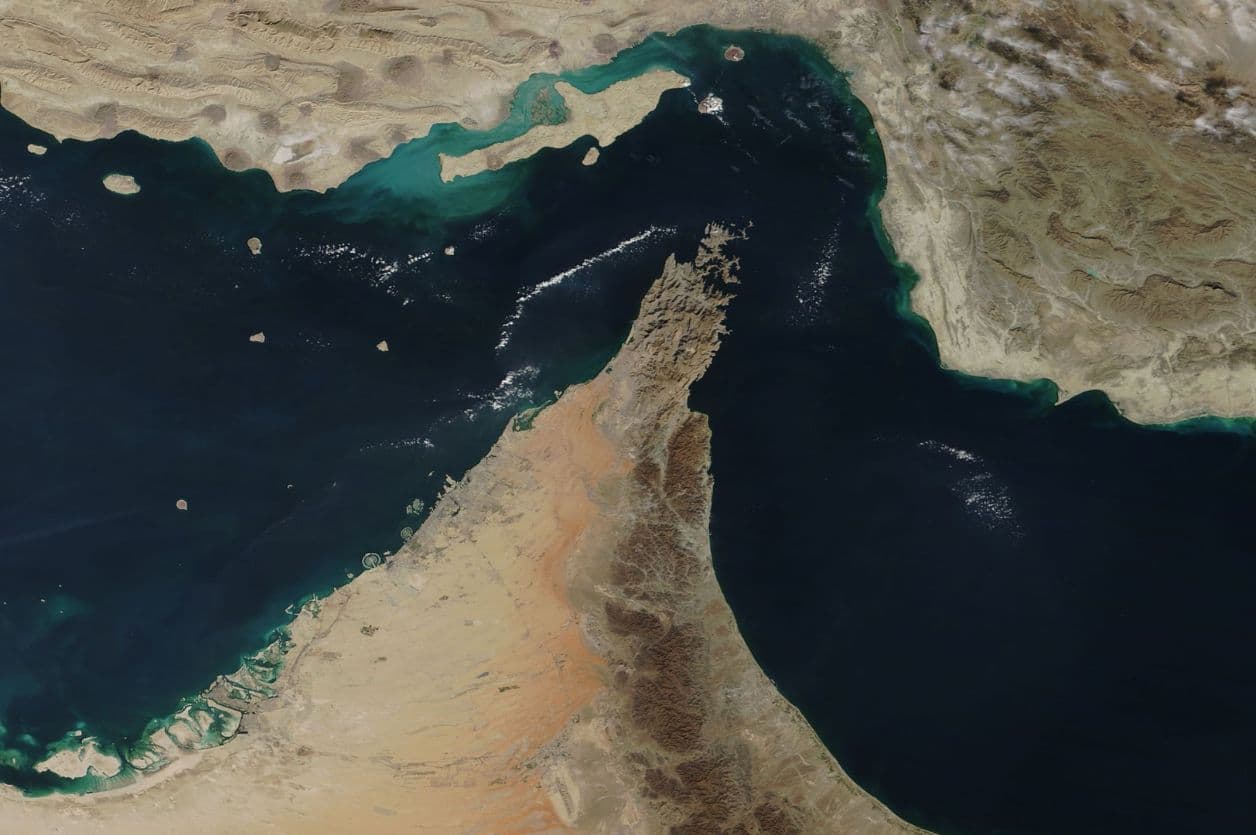
The maritime dimension of the conflict intensified as two oil tankers operated by Greek company Dynacom Tankers were hit by projectiles near Oman on July 19, igniting fires and forcing evacuations. The IRGC claimed responsibility, stating that the vessels had attempted to transit through an “unsafe” southern route of the Strait of Hormuz under U.S. coercion. The United Kingdom Maritime Trade Operations agency confirmed that one vessel caught fire eight nautical miles northwest of Kumzar, Oman, and advised ships to proceed with caution.
U.S. President Donald Trump stated that the strikes were carried out to honor the fallen soldiers and to prevent Iran from obtaining nuclear weapons. Secretary of State Marco Rubio reiterated that Washington remained open to diplomacy but insisted that Iran’s attacks on U.S. forces impeded negotiations. Iranian Foreign Minister Abbas Araghchi said Tehran would only end the war once it had achieved a strategic advantage, while Foreign Ministry spokesman Esmaeil Baghaei confirmed that diplomatic messages were being exchanged through mediators.
The Pentagon was reported to have withheld information about dozens of U.S. troop injuries sustained in Jordan in the days leading up to the fatal attacks, continuing a pattern of underreporting casualties. Meanwhile, the U.S. deployed additional F-16 and F-35 fighter jets, along with refueling aircraft, to the Middle East in preparation for a possible escalation, with Israel placed on high alert. Reports indicated that Washington was considering expanded strikes on Iranian power plants and nuclear sites, though officials warned of depleted air defense interceptors.
Iran’s Supreme Leader Mojtaba Khamenei accused the U.S. of violating the June ceasefire agreement, calling the American president’s signature “worthless.” The conflict has disrupted global energy markets, with Brent crude prices rising above $90 per barrel and U.S. gasoline prices surpassing $4 per gallon.
Why it Matters
The July 2026 escalation between the United States and Iran represents a convergence of military, economic, and diplomatic crises that threaten to reshape the strategic balance in West Asia. The sustained U.S. air campaign, now in its ninth consecutive night, demonstrates a shift from limited deterrence to a sustained attrition strategy aimed at degrading Iran’s military infrastructure and maritime control capabilities. The targeting of command centers, air defenses, and coastal surveillance systems indicates a deliberate effort to neutralize Iran’s ability to project power across the Strait of Hormuz, a chokepoint through which roughly one-fifth of global oil and gas shipments pass.
Iran’s retaliatory strikes on U.S. bases in Jordan, Kuwait, and Bahrain reveal the geographic expansion of the conflict and the vulnerability of American forward-deployed assets. The IRGC’s claims of successful attacks on U.S. aircraft and radar systems underscore Tehran’s capacity to coordinate multi-theater operations using ballistic missiles and drones. The use of advanced air defense systems to down U.S. MQ-9 drones suggest that Iran’s integrated air defense network has improved in detection and interception capabilities.
The maritime incidents near Oman highlight the conflict’s direct impact on global energy security. The attacks on the Kavomaleas and Acheloos tankers, combined with U.S. enforcement of a naval blockade on Iranian ports, have effectively militarized the Strait of Hormuz. This has already driven oil prices upward and disrupted commercial shipping, with ripple effects on inflation and fuel costs worldwide. The Gulf Cooperation Council’s condemnation of Iranian strikes on civilian infrastructure, alongside U.S. denials of targeting non-military sites, illustrates the blurred lines between military and civilian targets in modern hybrid warfare.
Diplomatically, Washington and Tehran continue to signal conditional openness to negotiation, but their rhetoric and actions suggest that neither side is prepared to de-escalate without achieving tangible leverage. The Iranian foreign ministry’s acknowledgment of ongoing mediation efforts contrasts with President Trump’s public insistence on punitive strikes, reflecting a dual-track approach of coercion and limited diplomacy. The revelation that the Pentagon withheld casualty data further complicates domestic political dynamics in the United States, where public support for the war is low despite earlier polling favoring a peace deal.
The deployment of additional U.S. warplanes and refueling assets, coupled with Israeli intelligence support, points to a potential broadening of the conflict into a regional coalition effort. However, reports of depleted air defense interceptors and logistical strain suggest that Washington’s capacity for sustained escalation may be limited. Iran’s leadership, meanwhile, appears to be leveraging nationalist sentiment and regional alliances to frame the conflict as a defensive struggle against foreign aggression.
Strategically, the confrontation has exposed the fragility of deterrence in the Gulf. The collapse of the June ceasefire and the rapid return to high-intensity warfare demonstrate that neither side has established credible red lines. The attacks on energy infrastructure and shipping lanes have globalized the conflict’s consequences, linking Middle Eastern security directly to global economic stability. If the current trajectory continues, the risk of miscalculation leading to a wider regional war involving Israel and Gulf states will increase sharply, with potential long-term implications for alliance structures, energy markets, and international law governing armed conflict at sea.
Stay Informed. Stay Ahead.