U.S.–Iran Talks Yield 60-Day Peace Roadmap
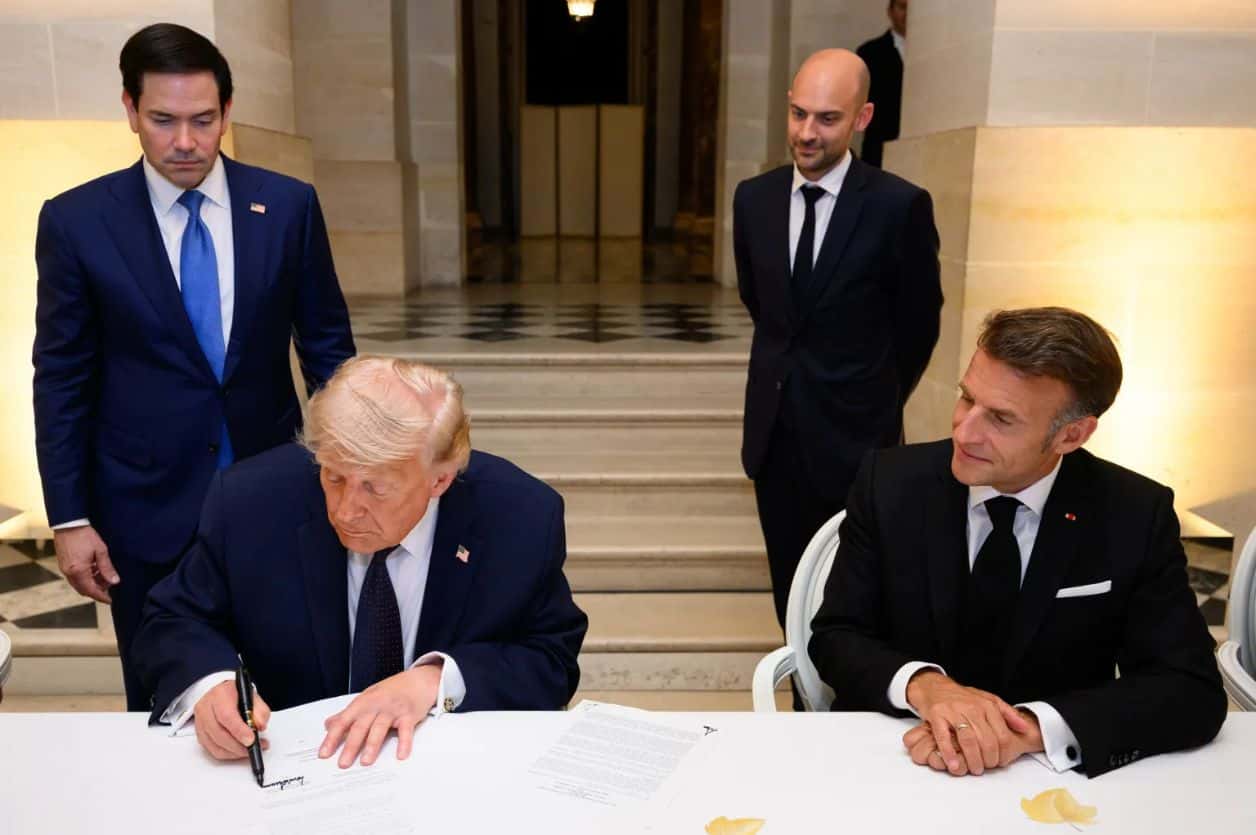
Photo credit: The White House
Intelligence Summary
The first round of direct negotiations between the United States and Iran concluded in Bürgenstock, Switzerland, on June 22, 2026, with mediators from Pakistan and Qatar announcing that both sides had agreed on a 60‑day roadmap toward a final peace agreement. The delegations were led by U.S. Vice President JD Vance and Iranian Parliament Speaker Mohammad Bagher Ghalibaf, with Foreign Minister Abbas Araghchi also participating. The talks followed a memorandum of understanding signed the previous week that committed both parties to refrain from the threat or use of force and to pursue de‑escalation across all fronts, including Lebanon and the Strait of Hormuz.
Mediators confirmed the establishment of a High‑Level Committee to oversee implementation, supported by working groups on nuclear issues, sanctions, and dispute resolution. A “communication line” was created to prevent incidents in the Strait of Hormuz, and a “de‑confliction cell” was agreed upon to monitor the cessation of hostilities in Lebanon. The roadmap foresees technical talks continuing through the week, with a final agreement targeted within two months.
Iranian Foreign Minister Araghchi stated that the talks produced major progress, including waivers for oil and petrochemical exports, the lifting of a blockade, the release of some frozen assets, and the launch of a reconstruction and development plan for Iran. The United States confirmed a 60‑day suspension of oil sanctions through a Treasury license authorizing production and sale of Iranian oil until August 21. Treasury Secretary Scott Bessent said the waiver was linked to Iran’s commitment to reopen the Strait of Hormuz and permit International Atomic Energy Agency (IAEA) inspectors to return.
Vice President Vance told reporters that Iran had agreed to allow IAEA inspectors back into the country, calling it a milestone toward ending any potential nuclear weapons program. However, Iranian Foreign Ministry spokesperson Esmail Baghaei said the nuclear issue was only briefly discussed and that no new commitments were made. The IAEA Director General Rafael Grossi met Swiss Foreign Minister Ignazio Cassis in Bürgenstock, thanking Switzerland for supporting diplomacy and confirming that nuclear monitoring remained a central issue.
The talks were nearly derailed when U.S. President Donald Trump threatened renewed strikes on Iran if it failed to restrain Hezbollah in Lebanon, warning that Washington would “hit Iran very hard again.” Ghalibaf dismissed the threats, saying Iran did not take them seriously and that its armed forces were ready to respond. Despite the exchange, negotiations continued late into the night, with mediators confirming that discussions lasted more than 18 hours.
The Lebanon conflict remained a central topic. Iran demanded that Israel halt its invasion of southern Lebanon as a condition for a broader deal. Israeli Prime Minister Benjamin Netanyahu and Defense Minister Israel Katz both declared that Israeli forces would remain in a “security zone” in southern Lebanon as long as necessary to protect northern Israel. The Lebanese Health Ministry reported more than 4,100 deaths since the escalation began in March. Lebanese President Joseph Aoun held calls with Vance and Qatari Prime Minister Sheikh Mohammed bin Abdulrahman Al Thani to discuss consolidating a ceasefire and operationalizing the de‑confliction mechanism.
The Strait of Hormuz remained contested. Iran claimed to have closed the waterway in response to Israeli attacks in Lebanon, while the United States reported that 67 ships transited the strait on June 21, up from 55 the previous day, under U.S. naval escort. Maritime intelligence data indicated only 12 vessels crossing on June 22, suggesting partial disruption. German Defense Minister Boris Pistorius said Berlin would not immediately authorize a Bundeswehr mission to assist in securing the strait, citing uncertainty over the ceasefire’s durability.
Pakistan and Qatar played central mediation roles. Pakistani Prime Minister Shehbaz Sharif and Qatari Prime Minister Sheikh Mohammed bin Abdulrahman Al Thani issued the joint statement announcing the roadmap and confirmed that technical talks would continue under their supervision. Iran’s President Masoud Pezeshkian planned a follow‑up visit to Pakistan to discuss implementation of the memorandum.
Despite the progress, mistrust persisted. Hardliners in Tehran criticized the negotiations as a retreat, while U.S. domestic critics argued that the memorandum offered excessive concessions to Iran. Analysts noted that the ideological divide between the two governments and Israel’s continued operations in Lebanon could undermine the fragile ceasefire.
Why it Matters
The Switzerland negotiations represent the most significant direct U.S.–Iran engagement since the collapse of the 2015 nuclear accord, signaling a potential recalibration of regional power dynamics. The 60‑day roadmap links de‑escalation in Lebanon, maritime security in the Strait of Hormuz, and nuclear transparency into a single framework, illustrating how energy security, military deterrence, and diplomacy are now interdependent. The temporary waiver of oil sanctions and the reopening of Hormuz immediately affected global energy markets, with Brent crude prices falling by more than 1 percent as traders anticipated restored supply routes. This demonstrates how diplomatic progress can rapidly influence energy stability and insurance risk in one of the world’s most critical chokepoints.
Strategically, the talks highlight the re‑emergence of Pakistan and Qatar as pivotal mediators capable of bridging U.S.–Iranian hostility. Their involvement reflects a shift toward multipolar diplomacy in which middle powers manage conflicts that major powers cannot resolve alone. The creation of a High‑Level Committee and technical working groups institutionalizes this mediation, potentially reducing the risk of miscalculation in the Gulf.
The inclusion of a Lebanon de‑confliction cell underscores the linkage between Iran’s regional proxy network and its broader diplomatic posture. If effective, the mechanism could constrain Hezbollah’s operations and reduce Israeli–Iranian confrontation, but its success depends on Israel’s willingness to coordinate indirectly with Iran through mediators. Netanyahu’s insistence on maintaining a security zone in southern Lebanon suggests that Israel views the arrangement as a tactical pause rather than a strategic concession. This tension could test the credibility of the U.S. as both Israel’s ally and Iran’s negotiating counterpart.
The nuclear dimension remains ambiguous. While U.S. officials claimed that Iran agreed to readmit IAEA inspectors, Tehran’s denial of new commitments reveals a gap between political signaling and technical compliance. The IAEA’s involvement, supported by Switzerland, provides a verification channel but also exposes the fragility of trust. Any disagreement over inspection scope could quickly unravel the broader peace framework.
Trump’s public threats during the summit illustrate the volatility of U.S. policy communication and its potential to undermine formal diplomacy. The Iranian delegation’s temporary walkout and subsequent return show that both sides are willing to absorb political theatrics to preserve negotiations, but such incidents erode confidence in the durability of commitments.
For Europe, the talks carry direct implications for maritime security and energy diversification. Germany’s hesitation to deploy minesweepers without a stable ceasefire reflects the EU’s cautious approach to military engagement in the Gulf. European states depend on Hormuz for energy transit and therefore have a vested interest in the success of the communication line established under the roadmap.
The agreement’s economic provisions, including sanctions waivers, asset releases, and reconstruction funding, could reshape Iran’s post‑war recovery and regional trade patterns. The U.S. proposal to channel unfrozen funds toward American agricultural exports indicates an attempt to control the flow of benefits while mitigating domestic criticism.
Ultimately, the Switzerland talks reveal both the potential and the limits of transactional diplomacy in a multipolar conflict environment. The roadmap’s success will depend on whether technical negotiations can translate symbolic progress into verifiable actions: sustained ceasefire in Lebanon, safe navigation through Hormuz, and credible nuclear monitoring. Failure in any of these areas could reignite hostilities and destabilize global energy markets. The process demonstrates that modern conflict resolution requires simultaneous management of military, economic, and informational dimensions under intense public scrutiny.
Stay Informed. Stay Ahead.