U.S. Naval Blockade of Iran Signals Shift to Maritime Pressure
Intelligence Summary
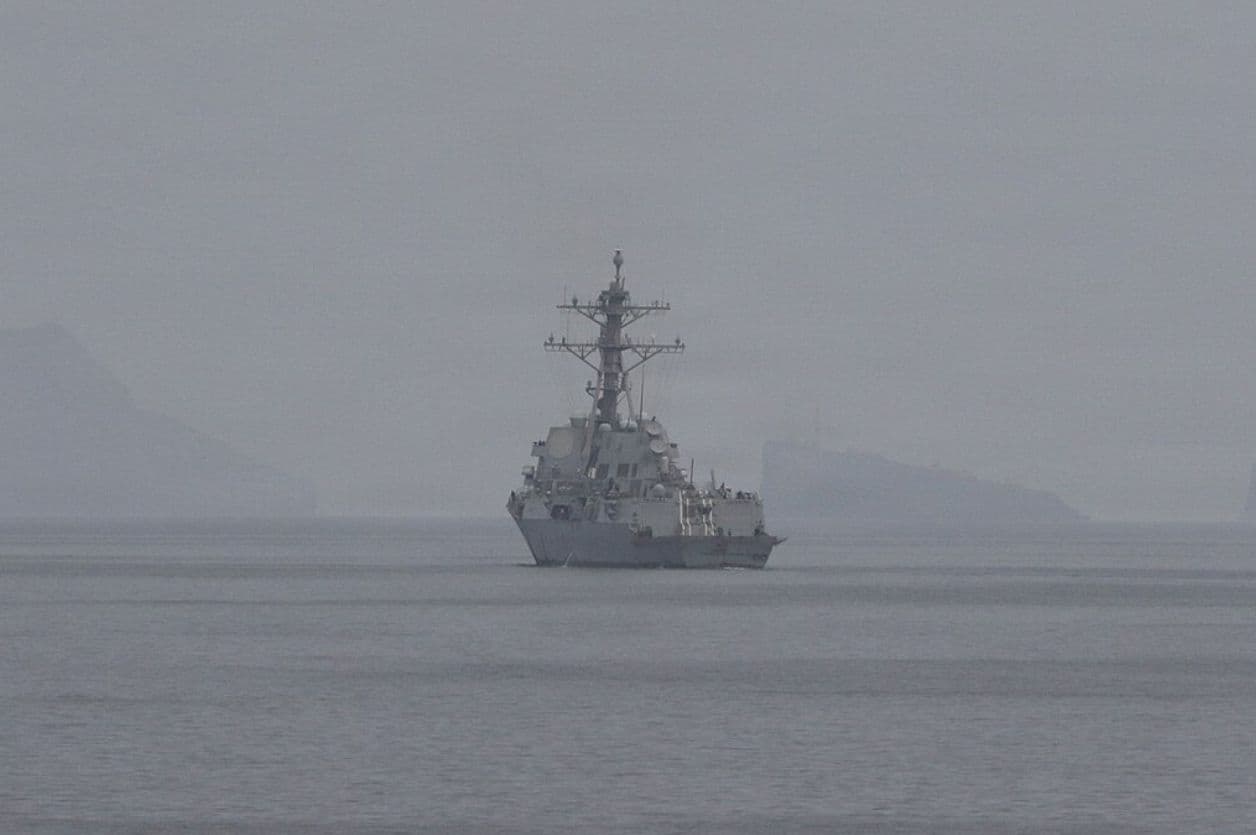
The United States initiated a naval blockade targeting vessels entering or departing Iranian ports and coastal areas after U.S.-Iran ceasefire negotiations in Islamabad ended without an agreement. The blockade took effect on Monday at 10:00 am Washington, DC time, corresponding to 14:00 GMT. President Donald Trump announced the measure on Sunday and framed it as a response to Iranian tolling practices and as leverage following the failed talks. Trump stated that any Iranian fast attack ships approaching the blockade would face immediate destruction, and he repeated a claim that Iran’s navy had been obliterated with 158 ships destroyed.
The UK Maritime Trade Operations center in Dubai circulated an advisory stating it had been notified that access restrictions would apply without distinction to vessels of any flag engaging with Iranian ports, oil terminals, or coastal facilities, and that the restrictions encompassed the entirety of Iran’s coastline and energy infrastructure. The advisory also indicated that transit passage through the Strait of Hormuz to or from non-Iranian destinations would not be affected, while warning of military presence, directed communications, and right-of-visit procedures during passage. U.S. Central Command described enforcement as impartial across national flags for vessels entering or departing Iranian ports and coastal areas, while permitting humanitarian shipments subject to inspection.
The blockade unfolded during a two-week ceasefire that began on Wednesday, with multiple actors emphasizing that the ceasefire was still holding while warning it could fray under new maritime restrictions. Pakistan, which mediated the ceasefire, stated it would continue mediation, and Prime Minister Shehbaz Sharif said on Monday that full efforts were underway to resolve outstanding issues. Trump stated later on Monday that diplomacy remained possible and said Iran had contacted the United States seeking a deal, while also reiterating that Iran would not be allowed to have a nuclear weapon.
Iranian officials and military-linked statements characterized the U.S. action as piracy and asserted that restricting vessel movement in international waters was illegal. Iran’s armed forces messaging included a warning that if port security was threatened then no port in the region would be safe, and it indicated that enemy-affiliated vessels would not have the right to pass through the Strait of Hormuz while other vessels could be allowed passage under Iranian regulations. The Islamic Revolutionary Guard Corps warned that if fighting resumed Iran would introduce new capabilities, and it previously released a navigation map indicating a safe route through the strait due to the likelihood of anti-ship mines in the main traffic zone. An Iranian parliament committee chair, Ebrahim Azizi, described a draft bill to require tolls from hostile countries and to establish a new management and control system for the strait and the Persian Gulf, with fees later set by the cabinet.
Oil prices rose above $100 per barrel on Monday, with Brent at $101.38 and West Texas Intermediate at $102.58 in afternoon trading, alongside modest losses in major European equity indices. U.S. Energy Secretary Chris Wright assessed that oil prices could peak in the next few weeks and linked price relief to meaningful ship traffic resuming through the Strait of Hormuz. The International Energy Agency, IMF, and World Bank leadership warned that damage to energy facilities could keep fuel and fertilizer prices high for a prolonged period, with the IEA stating that one-third of 80 monitored Middle East energy facilities had been damaged.
On the first full day of the blockade, at least three vessels transited the Strait of Hormuz into the Gulf without heading to Iranian ports, including Panama-flagged Peace Gulf and two U.S.-sanctioned tankers, Murlikishan and Rich Starry. Rich Starry, owned by Shanghai Xuanrun Shipping Co Ltd and sanctioned by the United States for dealing with Iran, carried about 250,000 barrels of methanol and had a Chinese crew. China’s foreign ministry spokesperson Guo Jiakun described the U.S. blockade action as dangerous and irresponsible and warned it would exacerbate tensions and undermine the fragile ceasefire. Jiakun noted China’s reliance on Middle East oil and reported that China bought more than 80 percent of Iran’s shipped oil last year, including 1.4 million barrels per day of Iranian crude out of 10.4 million barrels per day of seaborne crude imports.
Why it Matters
The blockade marks a shift from kinetic strikes to coercive maritime pressure, but it still carries escalation risk because it forces daily operational decisions at sea. Interdiction, boarding, and inspection regimes create repeated opportunities for miscalculation, especially when both sides claim authority over access and compliance. The requirement for commercial vessels to navigate overlapping demands, including permissions and inspections, increases the chance that a single encounter becomes a political trigger.
The strategic center of gravity is the Strait of Hormuz as a chokepoint where military control translates directly into economic leverage. The blockade’s design targets Iranian port access rather than formally closing neutral transit, yet the practical effect can still suppress traffic through risk pricing. Insurance premiums, crew safety concerns, and uncertainty about right-of-visit procedures can deter shipping even when passage is technically permitted. This is why a measure framed as limited can still function as a de facto constraint on broader flows.
Energy security consequences are immediate and global. Price signals above $100 per barrel are not only a market reaction but also a policy stress test for governments managing inflation, fuel subsidies, and strategic reserves. The warnings from international economic and energy institutions highlight a second-order effect: fertilizer and agricultural input disruptions. If energy and fertilizer prices remain elevated, the impact migrates from fuel pumps to food systems, with poorer import-dependent states facing the earliest and sharpest exposure due to planting calendars and input timing.
The blockade also sharpens alliance management problems for Washington. Some partners prioritize reopening the strait quickly and avoiding operational entanglement, while others coordinate closely with U.S. policy. Divergent allied postures complicate coalition signaling and reduce the credibility of any claim that the measure reflects a unified international mandate. That matters because maritime enforcement without broad participation can look less like collective security and more like unilateral sanctions enforcement at sea, which invites legal contestation and reciprocal measures.
International law and legitimacy are not side issues here because freedom of navigation is the core norm at stake. Competing claims about piracy, customary maritime law, and the law of armed conflict shape how third states interpret compliance, especially shipping registries, insurers, and port authorities. If major powers normalize stopping vessels based on financial or ownership links rather than destination and flag-state consent, the precedent can diffuse beyond this conflict into other theaters where sanctions and naval power intersect.
Major power competition is embedded in the energy and sanctions dimension. China’s dependence on Middle East and Iranian oil makes it a pivotal stakeholder, and its public criticism signals that the blockade is not only a bilateral U.S.-Iran instrument but also a pressure point on Beijing’s energy security. The continued movement of sanctioned tankers illustrates how sanctions enforcement and maritime control collide in practice, with commercial actors probing the boundaries of what is permitted, tolerated, or enforceable.
Finally, the blockade’s timing during a ceasefire creates a paradox. It can be used as leverage to extract concessions, but it can also erode the ceasefire’s stability by introducing new friction points and perceived violations. When ceasefires depend on restraint and predictable rules, adding a contested maritime enforcement regime increases uncertainty. That uncertainty can harden negotiating positions, empower spoilers, and shorten the political runway for diplomacy.
Stay Informed. Stay Ahead.