
US Strikes, Pakistan's Saudi Deployment, and Cuba's Drone Threat
Intelligence Summary
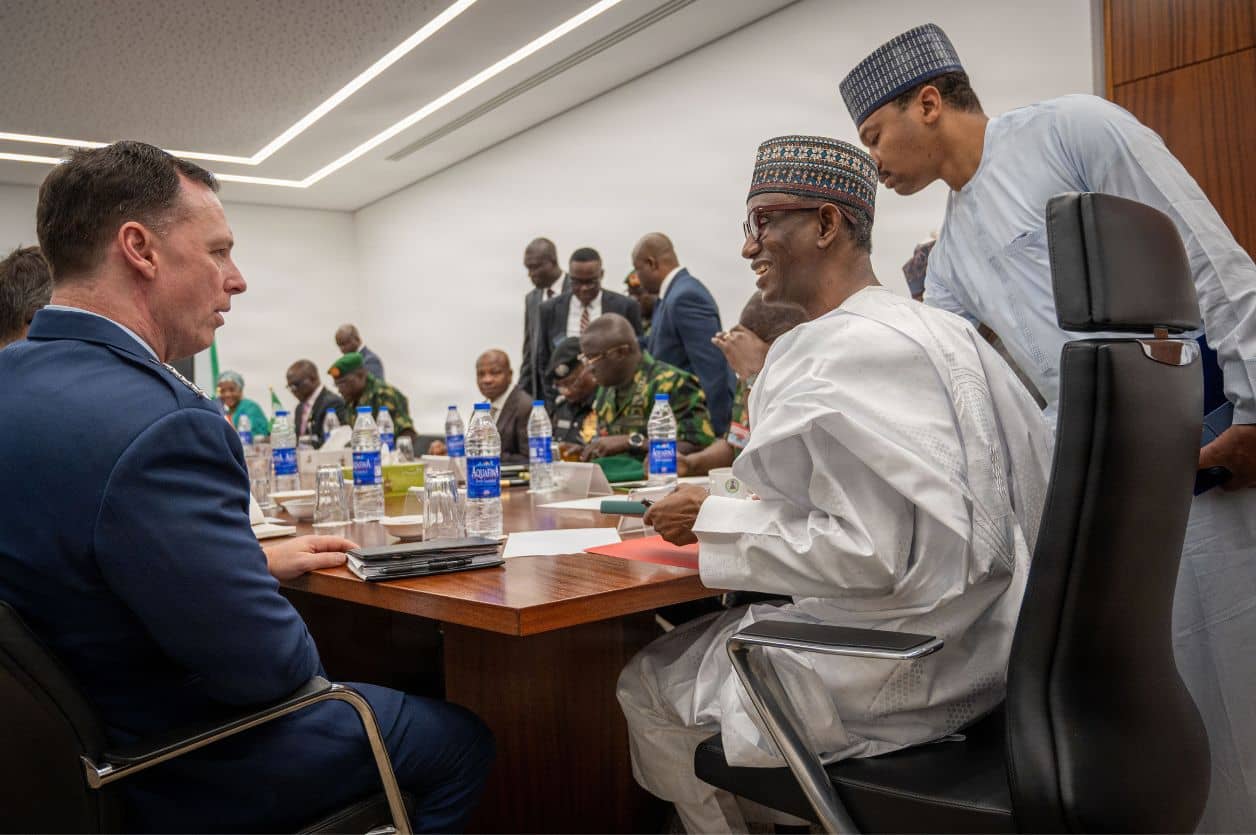
United States Africa Command conducted additional air strikes against ISIL fighters in northeastern Nigeria on Sunday in coordination with the Nigerian government, and described the action as additional kinetic strikes. AFRICOM stated on Monday that no US or Nigerian forces were harmed during the strikes. AFRICOM framed the strikes as reducing ISIL capacity to plan attacks threatening the safety and security of the United States and partners, and reiterated reliance on specialized US capabilities to support partner forces.
The latest strikes followed announcements by both US President Donald Trump and Nigerian President Bola Tinubu that Abu-Bilal al-Minuki was killed in a strike on his compound in the Lake Chad Basin. Tinubu described al-Minuki as second in command of ISIL and said he was targeted along with several lieutenants. Trump announced the killing first via a social media post on Friday without specifying when or where the joint operation occurred. Trump later stated on Truth Social on Saturday that the operation occurred at his direction and characterized al-Minuki as second in command of ISIS globally. Trump also asserted that sources kept the United States informed about al-Minuki’s activities.
US officials told The New York Times that al-Minuki was killed during an attack on two small islands in Lake Chad, where Nigeria, Niger, Chad, and Cameroon converge. Those officials described roughly two dozen US and Nigerian commandos engaging al-Minuki and about three dozen fighters, followed by a three-hour battle and a US airstrike that killed al-Minuki on one island. The Nigerian Defence Headquarters issued a statement addressing social media claims that Nigeria had previously killed an ISIS fighter with the same name in 2024, and said the individual eliminated on 16 May 2026 was positively identified, while noting similar names and aliases are common among ISWAP and Boko Haram members.
Before pledging allegiance to ISIL in 2015, al-Minuki was described by the Nigerian army as a prominent Boko Haram leader. The Nigerian army said al-Minuki oversaw key ISIL operations in the Sahel and West African regions for the ISIL affiliate Islamic State West Africa Province. A former director of the US Department of State Services in Nigeria, Dennis Amachree, assessed that the killing would create a major vacuum in ISWAP leadership and financing because multiple top officers were decimated with him.
Dozens of US soldiers were deployed to Nigeria in recent months to support operations against armed groups through intelligence sharing and technical support. Nigeria’s Defence Headquarters spokesperson Samaila Uba stated US soldiers would not have a direct combat role and would operate under full Nigerian command authority while sharing technical expertise. Trump said after Christmas Day strikes on ISIL-affiliated fighters in northwestern Nigeria that he preferred a one-time strike but would conduct repeated strikes if killings of Christians continued, while the Nigerian government rejected his accusation of mass killings of Christians and analysts assessed victims include people of all faiths. The first known US airstrike in Nigeria since those Christmas Day strikes occurred during the Lake Chad operation, according to the account provided by US officials. News.Antiwar also stated US Tomahawk missiles on Christmas Day fell on two villages far from the intended target. Amnesty International’s Nigeria office said over 100 civilians were killed by airstrikes on a market in northwestern Nigeria on Sunday, May 10, while the Nigerian government acknowledged a strike in the area but claimed no civilians were harmed.
Separately, Pakistan deployed a combat-capable package to Saudi Arabia under a mutual defence pact, including 8,000 troops, a squadron of around 16 aircraft mostly JF-17 fighters, an air defence system identified as the Chinese HQ-9, and two drone squadrons, with Saudi Arabia financing the equipment operated by Pakistani personnel. The aircraft were sent in early April, and the deployment was described by sources as intended to support Saudi forces if the kingdom comes under further attack. The pact’s terms were described as confidential, with sources stating it allows up to 80,000 Pakistani troops and may include Pakistani warships, while Pakistan’s Defence Minister Khawaja Muhammad Asif previously implied Saudi Arabia falls under Pakistan’s nuclear umbrella. The deployment occurred while Islamabad served as the main mediator in the Iran war, helped broker a ceasefire between Washington and Tehran that held for six weeks, hosted the only round of US-Iran peace talks so far, and planned further rounds that were later called off. Reuters was cited as previously reporting Pakistani jets were sent after Iranian strikes hit key energy infrastructure and killed a Saudi national, and as later reporting Saudi Arabia conducted numerous unpublicized retaliatory strikes on Iran.
In the Western Hemisphere, classified intelligence cited by Axios indicated Cuba acquired more than 300 military drones and discussed plans to use them against the US naval base at Guantanamo Bay, US military vessels, and possibly Key West, Florida. US officials cited concern about drone warfare developments and the presence of Iranian military advisers in Havana, and stated Cuba had acquired attack drones from Russia and Iran since 2023 and sought to buy more. Cuba’s Foreign Minister Bruno Rodriguez accused the United States of fabricating a case to justify sanctions and potential military aggression, and stated Cuba neither threatens nor desires war. Cuba’s Deputy Foreign Minister Carlos Fernandez de Cossio described an intensifying campaign to justify military attack and framed the United States as the aggressor and Cuba as acting in self-defence. US pressure measures included steps reported by US media toward indicting former Cuban president Raul Castro, a CIA Director John Radcliffe visit to Havana on Thursday, and US threats of tariffs on any country exporting oil to Cuba that effectively cut off shipments and contributed to massive power failures. Axios cited an unnamed CIA official stating Radcliffe warned Cuba against serving as a platform for adversaries to advance hostile agendas in the hemisphere. Trump stated earlier in May that the United States would be taking over Cuba almost immediately, and separately said Cuba would be next after a US military operation to depose Venezuela’s longtime leader Nicolas Maduro.
Why it Matters
These developments show a widening operational footprint where counterterrorism, alliance management, and great-power competition increasingly overlap. In Nigeria, repeated US strikes coordinated with local forces signal a shift from episodic action toward a more sustained campaign posture. The operational details described for Lake Chad, including commando involvement and a culminating airstrike, indicate a higher-risk model than remote strikes alone. That model can improve targeting against senior militant leadership, but it also increases the chance of mission creep and political backlash if civilian harm rises or if foreign forces are perceived as driving operations.
Civilian casualty allegations create a strategic vulnerability for both Washington and Abuja. Claims of more than 100 civilians killed in a market strike, alongside government denials, highlight the information contest that follows air operations. Even unresolved, such allegations can constrain partner legitimacy, complicate intelligence sharing, and provide recruitment narratives for insurgent groups. The earlier incident involving missiles landing far from an intended target reinforces how technical or intelligence failures can rapidly become strategic liabilities.
Pakistan’s deployment to Saudi Arabia demonstrates how the Iran war is reshaping regional force postures beyond the immediate battlefield. The reported package is not symbolic. It includes combat aircraft, drones, and a high-end air defense system, plus thousands of troops with an option for far larger numbers. This materially strengthens Saudi defensive capacity and signals deterrence to Iran by raising the prospect of direct Pakistani involvement if Saudi territory is struck again. The reference to a nuclear umbrella, even as an implication rather than a formal declaration, adds escalation sensitivity. It can deter attacks, but it also increases the risk that miscalculation triggers a broader confrontation involving a nuclear-armed state.
The Pakistan-Saudi arrangement also illustrates how diplomacy and military hedging can proceed simultaneously. Islamabad’s mediator role in US-Iran talks coexisted with a major reinforcement of Saudi Arabia. That dual-track posture may preserve leverage with multiple sides, but it can also reduce perceived neutrality and complicate future mediation if Tehran views deployments as enabling Saudi retaliation.
Cuba’s alleged acquisition of more than 300 drones, paired with claims of Iranian advisers in Havana and procurement links to Russia and Iran, underscores a near-shore security dilemma for the United States. Even if operational plans discussed in intelligence are aspirational, the combination of unmanned systems and external advisers compresses warning time and expands the set of actors who could exploit Cuban territory for coercion, deniable attacks, or signaling. This is especially salient given the named potential targets, including Guantanamo Bay and maritime assets.
The US response toolkit described is not limited to military options. It includes intelligence signaling through a senior-level visit, legal pressure via potential indictments, and economic coercion through oil-related tariff threats that contributed to power failures. This blend suggests a coercive strategy designed to raise costs and deter alignment with adversaries, while also shaping domestic and international narratives about justification and proportionality. Cuban officials’ public framing of an intensifying campaign to justify military attack indicates that information operations and legal positioning are already central to the confrontation.
Across all three theaters, drones and air power are the connective tissue. They enable reach, reduce force protection burdens, and accelerate escalation dynamics. They also magnify attribution disputes and civilian harm controversies. The net effect is a more interconnected security environment where regional conflicts, counterterrorism missions, and major power rivalry reinforce each other and raise the stakes of misperception.
Stay Informed. Stay Ahead.