U.S. Expands Military Posture Abroad Amid Nigeria and Venezuela Tensions
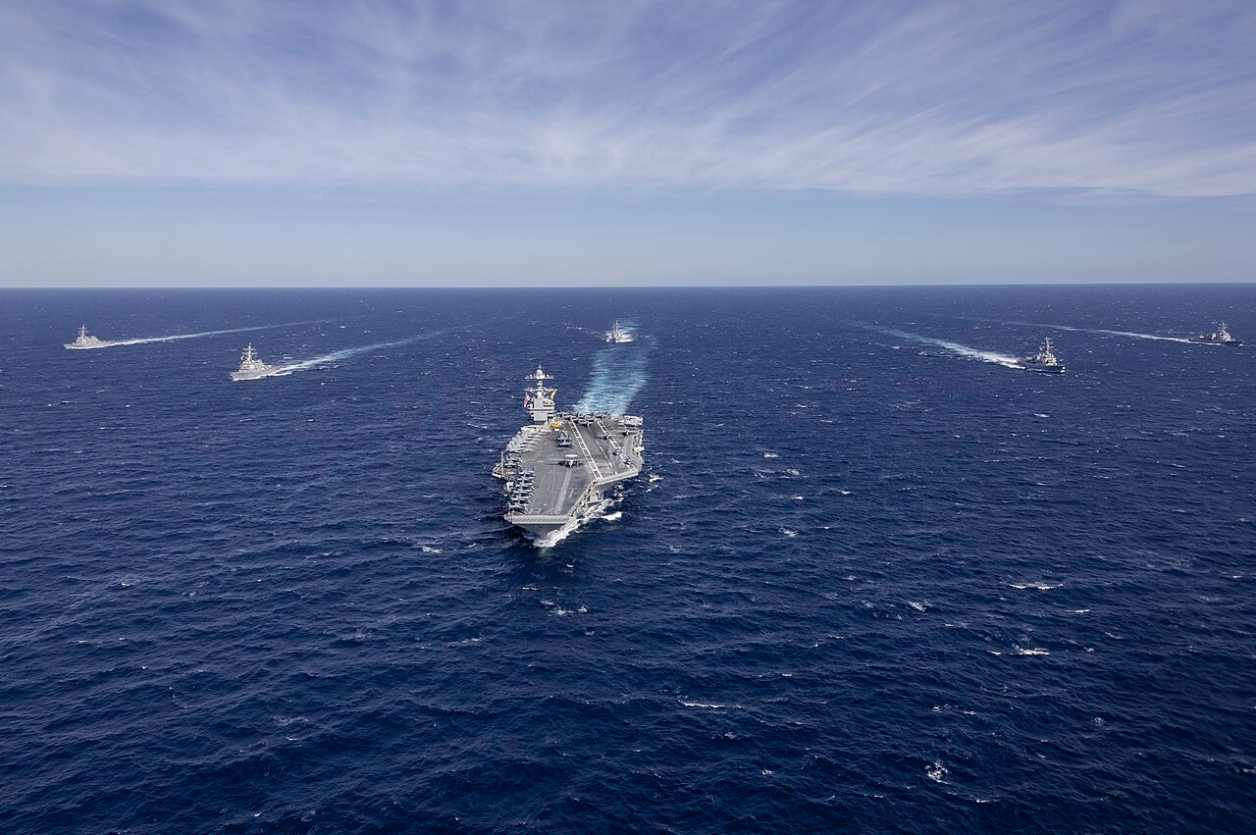
Photo credit: U.S. Navy
Intelligence Summary
Between October 31 and November 3, 2025, U.S. President Donald Trump issued a series of public statements threatening potential military action in both Nigeria and Venezuela, citing religious persecution and narcotics trafficking as justifications.
On November 1, Trump announced that he had directed the Pentagon to prepare plans for possible strikes or troop deployments in Nigeria, describing the situation as a “mass slaughter” of Christians and designating the country a “Country of Particular Concern” under U.S. religious freedom law. He stated that if Nigeria failed to stop the killings, the United States would stop providing aid and might intervene militarily. Defense Secretary Pete Hegseth confirmed that the Department of War had begun preparations for potential action.
Nigerian officials, including presidential adviser Daniel Bwala and Foreign Ministry spokesman Kimiebi Imomotimi Ebienfa, rejected the allegations of Christian genocide and warned that any U.S. military intervention would violate Nigeria’s sovereignty. President Bola Ahmed Tinubu emphasized that Nigeria’s security challenges affect all faiths and that the government would cooperate with Washington only within the bounds of international law. Nigerian officials reiterated that Boko Haram and Islamic State West Africa Province are responsible for indiscriminate violence against both Muslims and Christians, however, the violence has resulted in the deaths of over 50,000 Christians since 2009.
The Nigerian government’s response was specific and firm, calling for dialogue rather than confrontation. Bwala suggested that Trump’s rhetoric was intended to force a bilateral meeting rather than signal imminent military action. Analysts within Nigeria described the U.S. threat as a reflection of “massive state failure” in addressing insecurity but warned that external intervention could worsen instability.
Simultaneously, the Trump administration expanded its military positioning in the Caribbean and Latin America. Reports indicated that U.S. forces had deployed approximately 10 naval vessels and 10,000 troops to the Caribbean, with a reported additional 6,000 sailors and marines aboard the USS Gerald R. Ford carrier strike group, marking the largest regional buildup since the 1962 Cuban Missile Crisis. The Pentagon also conducted at least 15 strikes on alleged drug-trafficking vessels in the Caribbean and Pacific, killing approximately 65 people.
On November 2 Trump concurred that he believed Nicholas Maduro’s time as the President of Venezuela might be limited, though he did not clarify if a landstrike was imminent. U.S. officials justified the buildup as part of a “counter-narcoterrorism” campaign, while critics, including UN human rights officials, described the maritime strikes as extrajudicial killings.
Venezuelan opposition leader and Nobel Peace Prize laureate María Corina Machado publicly endorsed U.S. escalation, stating that only military pressure could remove Maduro and confirmed that she was in contact with Secretary of State Marco Rubio and congressional allies. These developments follow the Trump Administration’s actions in August 2025, when the reward bounty for Maduro’s arrest was doubled to $50 million on drug trafficking charges.
Russia responded by announcing that it was closely monitoring the situation after recent reports alleged that Venezuela had requested military assistance, including radar and missile systems. Moscow’s Deputy Foreign Minister Sergey Ryabkov described the U.S. buildup as a display of unprecedented forceful pressure and reaffirmed support for Caracas under a strategic partnership treaty recently ratified on October 21.
Regional governments, including Mexico and Colombia, condemned the U.S. maritime strikes as violations of international law, while Cuba would likely increase its military readiness amid fears that Washington’s campaign could extend to Havana. Analysts noted that the U.S. strategy appeared aimed at cutting Venezuelan oil supplies to Cuba, thereby destabilizing both governments.
Why it Matters
The concurrent U.S. threats toward Nigeria and Venezuela illustrate the use of international diplomacy and military signaling as instruments of American foreign policy. In both cases, Washington invoked moral or security justification and religious freedom in Nigeria and narcotics interdiction in Venezuela to legitimize potential interventions that carry significant geopolitical implications.
In Nigeria, the rhetoric of defending Christians resonates with domestic political values in the United States but risks undermining cooperation in international counterterrorism efforts. Nigeria is a key regional power, a major oil producer, and a partner in West African security frameworks. A U.S. strike would violate international law and could destabilize the Sahel, where jihadist networks already exploit governance vacuums. The Nigerian government’s insistence on sovereignty reflects a broader African resistance to external military involvement, echoing past controversies over U.S. operations in Libya and Somalia.
The Venezuelan dimension represents a more direct confrontation with global rivals. The deployment of U.S. personnel and military vessels near Venezuelan waters signals a credible threat of force. The stated objective of combating narcoterrorism masks a potential strategic goal of regime change, consistent with long-standing U.S. efforts to remove Maduro and weaken Cuba’s socialist government. The linkage between Venezuelan oil exports and Cuban energy security makes this campaign a dual-pressure strategy.
Russia’s declaration that it is monitoring the situation and its ratification of a defense treaty with Venezuela introduces a deterrent element reminiscent of Cold War proxy dynamics. Any Russian logistical or intelligence support to Caracas would complicate U.S. operational planning and raise escalation risks. The potential presence of advanced radar systems or air defenses supplied by Moscow could transform a limited strike scenario into a broader confrontation.
The U.S. maritime strikes, which have killed approximately 65 people without public evidence of narcotics involvement, have drawn condemnation from the United Nations and regional governments. These actions erode Washington’s credibility in human rights issues and international law, potentially driving Latin American states closer to alternative partners such as China and Russia. The perception of U.S. diplomatic strategy reinforces historical narratives of the nation’s interventionism and could accelerate the regional shift toward multipolarity.
In Nigeria, the accusation of religious persecution risks increasing tensions and legitimizing extremist narratives. The Nigerian government’s balanced response of acknowledging security failures while rejecting external interference demonstrates an effort to preserve sovereignty and avoid escalation. However, vulnerabilities in Nigeria’s internal cohesion have been exposed, elevating the potential for external actors to exploit domestic instability for strategic leverage.
The broader pattern reveals a U.S. administration willing to employ military threats across multiple theaters simultaneously, from West Africa to the Caribbean. This approach strains diplomatic bandwidth and increases risk. It also signals to adversaries that Washington is prepared to act unilaterally, potentially prompting counterbalancing measures by Russia, China, and regional blocs such as ECOWAS and CELAC.
Ultimately, these developments highlight the intersection of international competition, energy geopolitics, and ideological confrontation. Nigeria’s oil reserves and Venezuela’s vast crude capacity make both countries critical to global energy markets. Any disruption, whether through sanctions, conflict, or regime change, would affect supply chains and price stability. The current U.S. military posturing carries economic and diplomatic consequences, reshaping alignments in both Africa and Latin America.
Key Actors
- United States
- Nigeria
- Venezuela
- Russia
- Cuba
- Mexico
- United Nations