
U.S. Tanker Seizures, Cuba Fuel Rationing, and Europe’s Winter Risks Converge
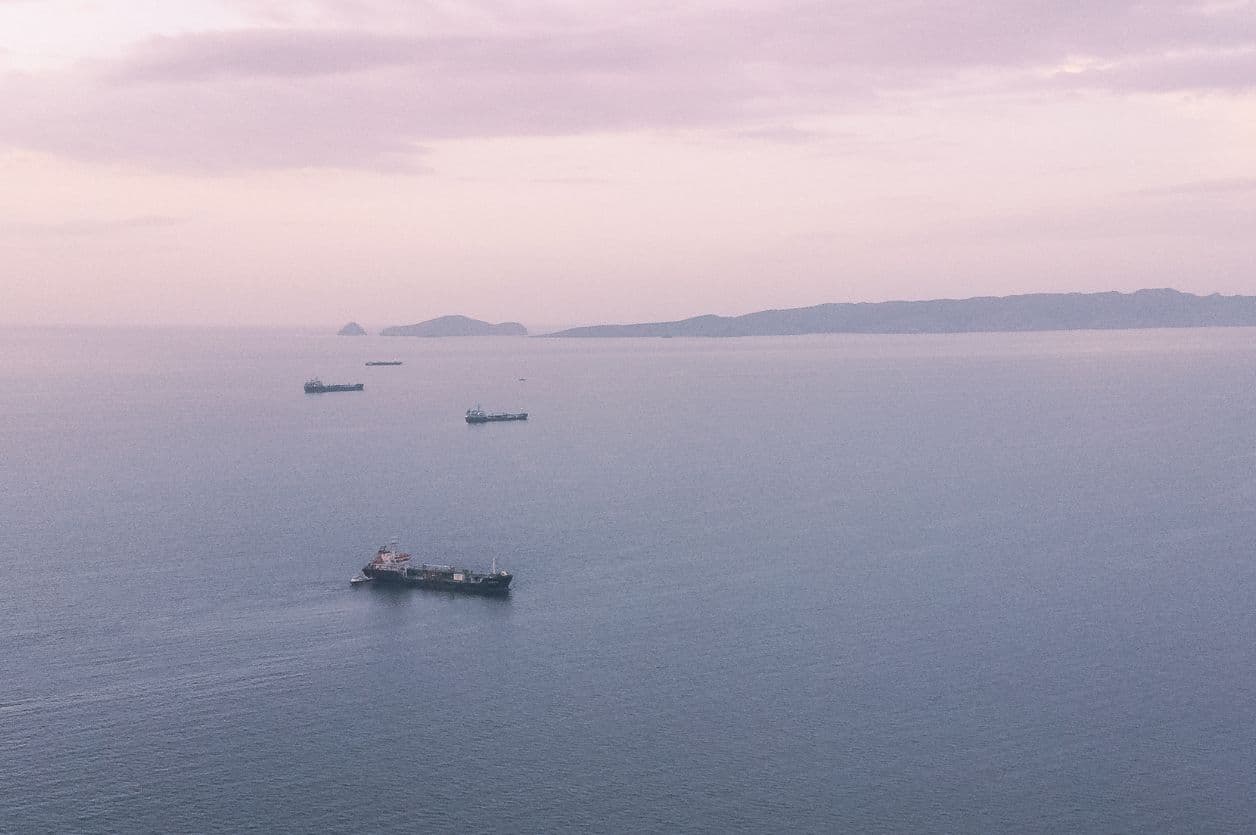
Oil tankers at sea. Photo credit: iStockPhoto.com/Manuel Rondon
Intelligence Summary
On February 9, 2026, the United States military announced it had seized a Venezuela-linked oil tanker in the Indian Ocean, framing the operation as proof it can enforce sanctions far from the Western Hemisphere. The Pentagon identified the vessel as the Panama-flagged Aquila II and said it had been operating in defiance of President Donald Trump’s quarantine of sanctioned vessels in the Caribbean. It added that U.S. forces tracked it from the Caribbean Sea to the Indian Ocean before boarding it. The Pentagon released footage described as showing heavily armed U.S. soldiers raiding the vessel from a helicopter. Reuters was cited as reporting, based on records from Venezuela’s state oil company Petróleos de Venezuela, S.A. (PDVSA), that the Aquila II left Venezuelan waters in early January carrying 700,000 barrels of crude oil.
The same reporting described the seizure as part of a broader Trump administration campaign to cut off Venezuela’s oil exports, with critics characterizing the actions as theft and international piracy. In December of 2025 the U.S. allegedly began seizing Venezuelan oil ships and captured Venezuelan President Nicolás Maduro in January 2026. Under threat of further U.S. strikes, Venezuela’s interim President Delcy Rodríguez was reported to have signed a law the previous month to open the country’s mostly state-controlled oil sector to foreign investment. Trump and aides have publicly discussed taking control of Venezuela’s oil and have allegedly claimed Venezuela’s crude reserves belong to the United States. Reports indicate that since the toppling of Venezuela’s former president, Venezuela has transferred tens of millions of barrels of oil to the United States under an energy deal. Delcy Rodríguez claimed the country received $300 million from oil sales to the U.S., while other media outlets were described as later citing U.S. officials saying Caracas received full payment of $500 million. In an interview published on Monday U.S. Energy Secretary Chris Wright claimed that he planned to visit Venezuela soon and begin dialogue with Caracas about the future leadership of PDVSA.
In Cuba, emergency fuel-conservation measures took effect in Havana on February 9, 2026, amid what was described as economic pressure from the Trump administration and rapidly dwindling fuel stocks. The measures were reported to include shuttering universities, reducing school hours and the work week, cutting public transport, and limiting fuel sales. A resident, Rosa Ramos, 37, detailed that she waited more than an hour for transport to work, while private taxi users reported fares rising overnight from about 200 pesos to 350 pesos. Cuba is an island of 9.6 million people under a U.S. trade embargo since 1962. Sources claim the country has faced extended power cuts and shortages of fuel, medicine, and food.
Reports indicate that Cuba had been cut off from critical oil supplies from Venezuela after Nicolás Maduro was toppled in a deadly U.S. military strike the previous month, and also from Mexico under threat of U.S. tariffs. Sources allege that Trump threatened tariffs on any country providing oil to Cuba and that shortages risked plunging the country into complete darkness as power plants struggled to keep electricity running. According to experts tracking maritime transport cited by AFP, no foreign fuel or oil tanker had arrived in Cuba in weeks. On February 8, 2026, it was announced that long-haul flights would not be able to refuel in Cuba for at least a month. Cuba’s Foreign Minister Bruno Rodríguez denounced U.S. actions on February 9, 2026, and reiterated Cuba’s willingness to engage in dialogue on its own terms. On February 8, 2026, Deputy Prime Minister Oscar Pérez-Oliva Fraga announced emergency rationing measures to protect essential services and indispensable economic activities, including food and electricity production and activities generating foreign currency. Additionally, reports detailed reduced interprovincial bus and train services, university classes moved online, and several hotels closed. Air Canada was reported on February 9, 2026, to be suspending flights to Cuba due to the fuel shortage and planning to fly empty planes to pick up about 3,000 customers. Mexico’s President Claudia Sheinbaum said on February 9, 2026, that sanctions harming Cuba’s people were not right, that Mexico would continue supporting Cuba and pursue diplomatic actions to restore oil shipments. She also said that Mexico was seeking an agreement with Washington to resume exports to Havana, and that Mexico sent two ships with more than 800 tons of humanitarian aid on February 8, 2026. Russia’s Kremlin spokesperson Dmitry Peskov was reported on February 9, 2026, to have accused Washington of using suffocating measures against Cuba and said Russia was discussing possible solutions to provide assistance.
In Germany, early-February reports highlighted public concern about gas storage drawdowns during what was described as the harshest winter in years, while officials emphasized supply security. Susanne Ungrad, press spokesperson for the Federal Ministry for Economic Affairs and Energy (BMWE), claimed that the gas supply was secured due to LNG infrastructure in Germany and Europe and main supply via Norwegian pipeline gas. Fiete Wulff, press spokesperson for the Federal Network Agency, emphasized there was no threat to gas supply, that storage fill levels are an important indicator but not the only one, citing pipeline and LNG shipments from neighboring countries. He warned that disruptive events such as terrorist attacks or failure of major import pipelines would be more critical.
Sebastian Heinermann, managing director of the Initiative Energien Speichern (INES), described imports as consistent year-round while consumption is flexible, giving an example of importing 3.1 TWh on a normal summer day while consuming 1.3 TWh, with the residual partly exported and largely stored. He explained that storage is filled in summer and used primarily in winter. Heinermann also stated gas prices were exceptionally high the previous summer, producing a negative summer-winter spread that reduced incentives to fill storage. BMWE’s spokesperson said storage filling should happen through market mechanisms and state intervention should occur only if it sustainably increases security of supply without relieving market participants of responsibility.
Olaf Geyer, head of the energy practice in Germany and Switzerland at Arthur D. Little, stated reserves were sufficient under normal conditions and if extreme cold spells do not last longer than one or two weeks. He warned that after winter the key question would be how storage is refilled, emphasizing the role of attractive wholesale prices and calling for more flexibility including additional storage capacity, demand-side management, and electrifying heat generation. Oskar Burmann, from an industry association for gas and hydrogen, said legally mandated fill-level requirements had been met and that LNG infrastructure and new pipeline connections allow the industry to respond at short notice to additional demand.
Why it Matters
Recent geopolitical developments show energy and maritime logistics being treated as instruments of coercion rather than purely commercial flows, with enforcement actions and supply denials producing immediate political and economic leverage. The seizure of the Aquila II in the Indian Ocean illustrates a sanctions model that is not limited to financial restrictions but extends into physical interdiction across distant operating areas. The key analytical point is that this is not only about Venezuela’s export revenue. It is also about demonstrating deterrence through capability signaling: tracking a tanker from the Caribbean to the Indian Ocean and boarding it by helicopter is a message to shippers, insurers, flag states, and intermediaries that sanctions risk can materialize as direct military action. That changes the cost-benefit calculus for sanctions evasion networks, which often rely on distance, jurisdictional complexity, and plausible deniability.
The Venezuela reporting also indicates how energy coercion can be paired with political engineering. The accounts link interdictions to a broader campaign to cut off exports and describe a post-strike political transition in which an interim leader signs a law opening the oil sector to foreign investment under threat of further US strikes. Even without adding outside context, the internal logic is clear: pressure is applied at sea and through export denial, while policy changes are induced onshore to reshape control over production and investment access. The contested payment figures for oil sales to the US, described as $300 million by Delcy Rodríguez versus later claims of $500 million cited by US officials, also matter because they show how information about energy transactions becomes part of the political contest, affecting legitimacy narratives and bargaining positions.
Cuba’s fuel emergency demonstrates the downstream effects of energy denial on state capacity and social stability. The measures described, including shutting universities, reducing work and school hours, cutting transport, and limiting fuel sales, are not marginal adjustments; they are economy-wide rationing steps that directly affect mobility, education, tourism, and foreign currency generation. The reported inability of long-haul flights to refuel for at least a month and the suspension of flights by a major carrier, alongside plans to extract about 3,000 stranded customers, show how quickly an energy shortage can propagate into aviation and reputational risk, with second-order impacts on tourism receipts and external connectivity. For analysts, this is a concrete example of how sanctions pressure can be amplified by targeting supply relationships.
The diplomatic reactions around Cuba also show how energy coercion can force third countries into difficult trade-offs. Mexico’s President Claudia Sheinbaum is described as condemning sanctions that harm civilians while simultaneously seeking an agreement with Washington to resume oil exports, indicating a constrained diplomacy shaped by exposure to US tariffs. Russia’s statement that it is discussing solutions to assist Cuba highlights how energy crises can become arenas for competition, where assistance offers can translate into political alignment or disputes.
Germany’s gas storage discussion underscores that energy weaponization is not only about sanctions and interdictions; it is also about resilience under stress and the vulnerability of critical infrastructure. Officials emphasized that supply was secure due to LNG infrastructure and Norwegian pipeline gas, but the Federal Network Agency spokesperson explicitly identified terrorist attacks or failure of major import pipelines as the more critical risk factor. That framing is important for strategic deterrence and homeland security planning: it elevates infrastructure protection and contingency planning as central to national security, not just energy policy. The negative summer-winter spread described by INES and the ministry’s insistence on market mechanisms show a structural vulnerability where price signals can undermine storage incentives, potentially creating exploitable timing windows for adversaries or for market manipulation narratives. Finally, the emphasis by Arthur D. Little’s Olaf Geyer on post-winter refill challenges and the need for flexibility, storage capacity, demand-side management, and electrification of heat indicates that resilience is a multi-year systems problem, not a single winter problem.
Key Actors
- United States
- Venezuela - Cuba - Mexico - Russia - Germany
Stay Informed. Stay Ahead.