US Action in Venezuela Challenges International Legal Norms
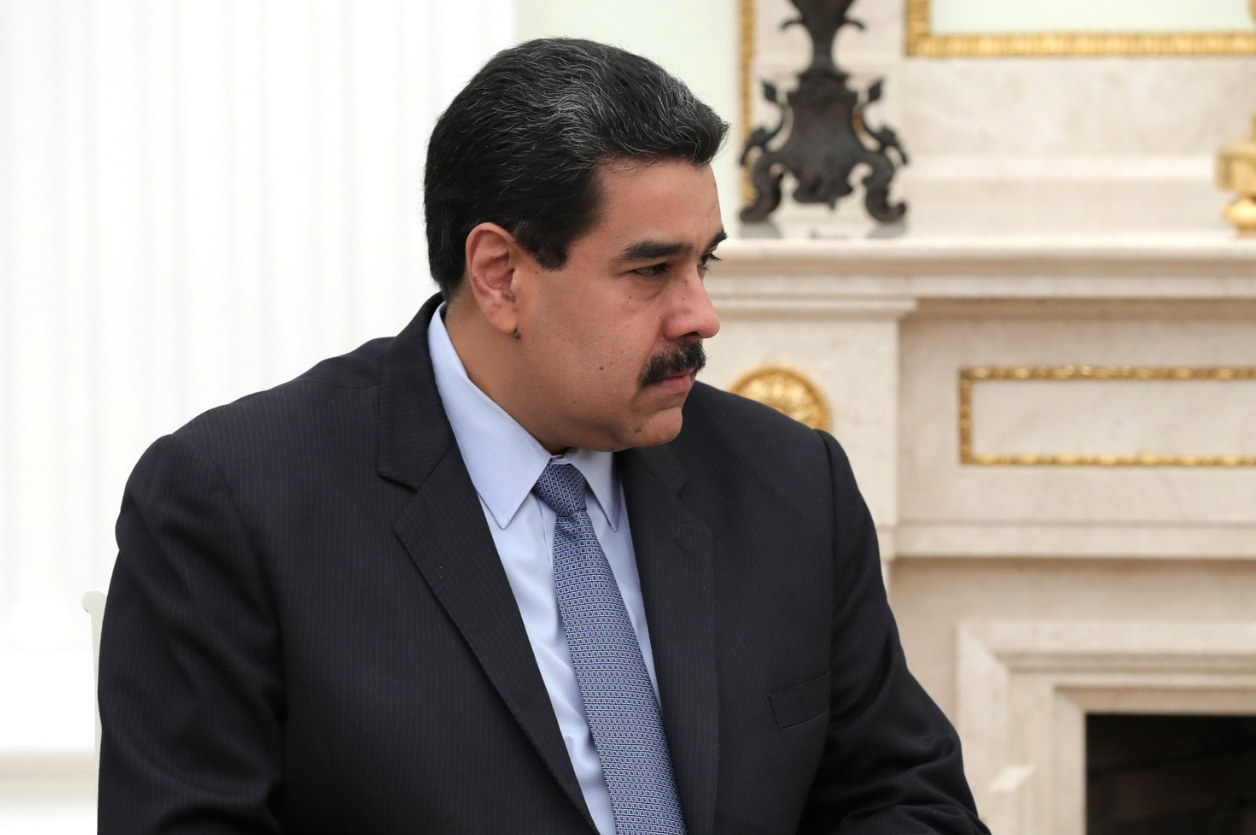
Photo credit: kremlin.ru
Intelligence Summary
On January 3, 2026, United States forces conducted a surprise military operation in Caracas that resulted in the capture of Venezuelan President Nicolás Maduro and his wife, Cilia Flores, who were subsequently transported to New York to face charges of narcoterrorism and weapons possession. The operation, which Washington described as a law‑enforcement action, was carried out without authorization from Congress or the United Nations Security Council.
Maduro appeared before Judge Alvin K. Hellerstein in Manhattan on January 5, emphasizing that he is the legitimate president of Venezuela and pleading not guilty to all charges. Flores, also entered a not guilty plea. The next hearing was scheduled for March 17, 2026. In Caracas, Vice President Delcy Rodríguez was sworn in as acting president, though opposition leader María Corina Machado and other political figures rejected her legitimacy, citing the Venezuelan constitution’s requirement for elections within 30 days of a presidential vacancy. However, it remained unclear whether Maduro's absence was regarded as permanent under Venezuelan law.
The United States justified the operation by accusing Maduro of leading a drug‑trafficking organization and argued that his removal was necessary to restore democracy and secure Venezuelan oil resources. Secretary of State Marco Rubio linked the action to alleged Venezuelan ties with Iran and Hezbollah, while President Donald Trump stated that Washington intended to “run” Venezuela to ensure its resources were properly managed.
The intervention triggered immediate international reaction. The United Nations Security Council convened an emergency session yesterday, January 5, 2026. UN Secretary‑General António Guterres expressed concern that international law had not been respected, while Colombia’s ambassador Leonor Zalabata condemned the operation as a violation of the UN Charter. Russia’s ambassador Vassily Nebenzya also denounced the U.S. action and warned that it signaled a return to lawlessness in global affairs. China joined Russia in the call for Maduro’s release.
European governments responded cautiously. German Chancellor Friedrich Merz and Foreign Minister Johann Wadephul avoided labeling the U.S. action a breach of international law, emphasizing instead the need for all nations to respect said law. The European Union issued a statement signed by 26 member states (all EU member states aside from Hungary) urging respect for international law but also stopped short of condemning Washington.
Domestically, the U.S. Congress debated the legality of the operation. House Speaker Mike Johnson stated that the United States sought only a “change in behavior” from Caracas and did not expect troops to be deployed. Senate Democrats, including leader Chuck Schumer, proposed a resolution requiring congressional approval for further military action, arguing that the president had exceeded his authority.
Cuba, a long‑time ally of Caracas, declared a national mourning for 32 Cuban security officers killed during the raid. The nation faces uncertainty over future energy supplies, as it relies heavily on Venezuelan oil. Iran condemned the operation as unlawful aggression and warned that it undermined the UN Charter. Iranian Supreme Leader Ali Khamenei emphasized his message of defiance, while Israeli officials suggested that the operation sent a warning to Tehran.
Analysts noted that the intervention risked escalating tensions with Iran, given the recent history of U.S.‑Israeli strikes on Iranian nuclear sites and the killing of senior Iranian officials in 2025. Some U.S. lawmakers and commentators argued that control of Venezuelan oil could offset potential disruptions in the Persian Gulf if conflict with Iran resumed, as roughly 20 percent of global oil passes through the Strait of Hormuz.
Despite the capture of Maduro, instability persists in Caracas. Last night, January 5, gunfire was reported near the Miraflores Palace after drones were sighted over the area, though the situation was quickly contained. Trump stated that no immediate elections would be held, asserting that Venezuela needed to be “nursed back to health” before a vote could occur.
Why it Matters
The U.S. operation in Venezuela marks a clear shift toward more direct and unilateral use of military force. The action bypassed both domestic and international legal frameworks, challenging the authority of the UN Security Council and weakening confidence in the international legal system. The inability of the UN to respond effectively exposes the structural limitations of multilateral institutions when a permanent member acts outside established norms.
Strategically, the intervention demonstrates a shift toward coercive enforcement of U.S. interests in the Western Hemisphere. By seizing a sitting head of state and transferring him to U.S. jurisdiction, Washington blurred the line between law enforcement and warfare. This precedent could embolden other nations to justify extraterritorial actions under similar pretexts, further weakening norms around sovereignty..
The operation also deepens the polarization of international power. Russia and China’s condemnation of the raid, coupled with muted European responses, highlights a widening divide between Western allies and the emerging multipolar bloc. Moscow’s response and its call for Maduro's release align with its broader campaign to challenge Western military interventions. Beijing’s support for Venezuela’s sovereignty reinforces its own opposition to external interference, particularly regarding Taiwan and the South China Sea.
Regionally, the intervention destabilizes Latin America’s security environment. Cuba’s loss of Venezuelan support threatens its energy security. Colombia faces potential refugee inflows and heightened domestic polarization. The perception that Washington may replicate similar operations elsewhere has already prompted regional governments to reassess defense postures and diplomatic alignments.
Energy security considerations are central to the strategic decisions driving these actions. Control over Venezuelan oil reserves gives Washington leverage in global markets and a potential buffer against disruptions in the Middle East. However, the militarization of energy policy risks entangling the United States in prolonged instability. If governance in Caracas remains contested, production shortfalls could offset any intended economic gains and perceptions of resource‑driven intervention may alienate partners across the Global South.
The domestic political dimension in the United States further complicates the picture. Congressional debate over war‑powers authority exposes institutional friction and polarization between the executive and legislative branches. If Congress reasserts its oversight role, future administrations may face greater constraints on unilateral military action. Conversely, if the precedent stands, it could normalize rapid‑strike interventions justified as law enforcement, expanding the scope of presidential power.
For Iran and its allies, the event reinforces perceptions of U.S. hostility and validates arguments for developing deterrent capabilities. Tehran’s warnings suggest that the operation may strengthen hard‑line factions opposed to negotiation. The linkage between Caracas and Tehran, emphasized by U.S. officials, risks blurring separate regional issues and increasing confrontation.
Finally, the intervention’s symbolic impact on global governance is profound. The UN’s decision not to act or offer explicit criticism, combined with Europe’s cautious diplomacy, signals a fragmentation of collective security mechanisms. If major powers increasingly act outside these frameworks, smaller states may seek protection through alternative alliances or deterrent capabilities. The intervention in Venezuela thus serves as both a demonstration of U.S. military reach and a catalyst for systemic instability in international relations.
Key Actors
- United States
- Venezuela
- Iran
- Russia
- China
- European Union
- United Nations
Stay Informed. Stay Ahead.