
US–Venezuela Standoff and the Militarization of the Caribbean
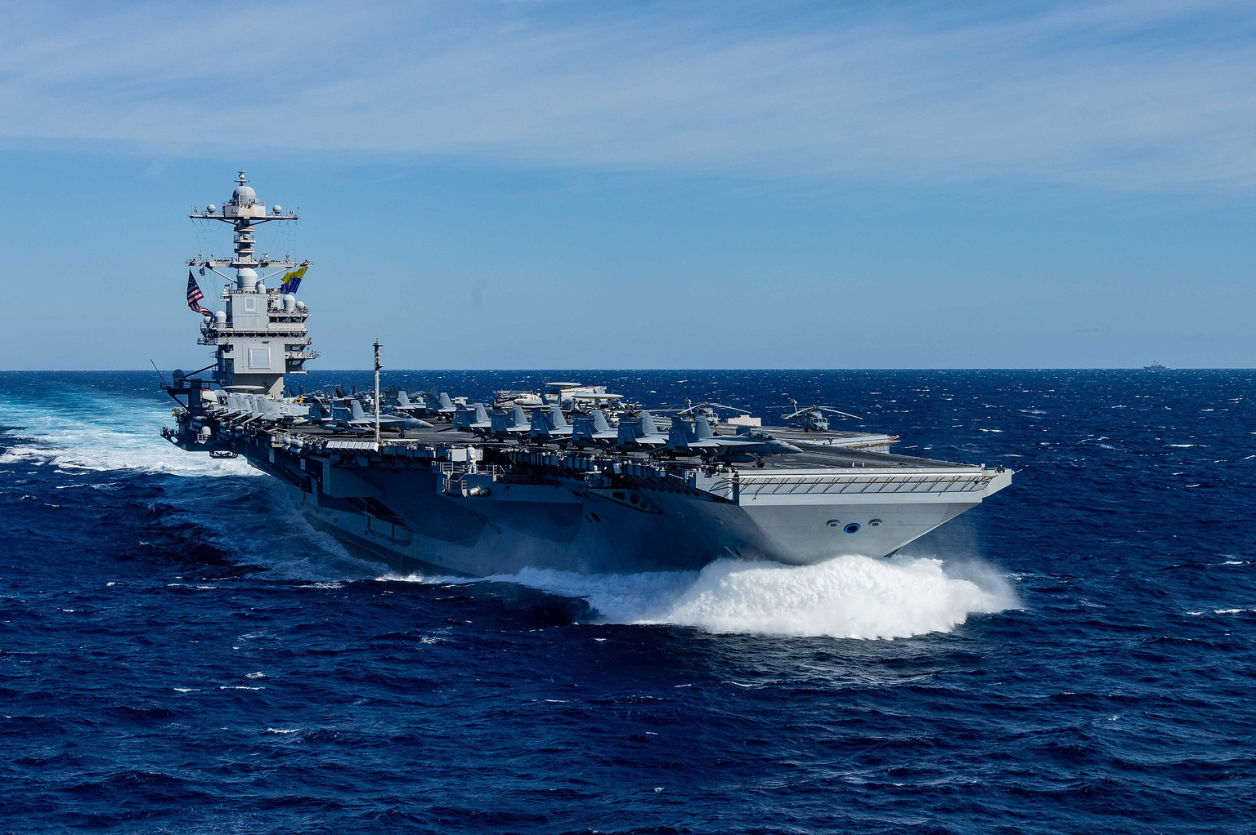
Photo credit: The U.S. Navy
Intelligence Summary
Tensions between the United States and Venezuela have escalated sharply following a series of U.S. military strikes on vessels in the Caribbean Sea that Washington claimed were engaged in drug trafficking. The most controversial incident occurred on September 2, 2025, when U.S. forces under Operation Southern Spear struck a Venezuelan boat, killing nine people and leaving two survivors clinging to debris. According to official statements, Defense Secretary Pete Hegseth authorized Admiral Frank Bradley to conduct the operation, but the decision to carry out a second strike that killed the survivors was made by Bradley himself. The White House confirmed that Hegseth had approved the overall mission but denied that he had ordered the killing of survivors, while President Donald Trump stated that he “would not have wanted” a second strike.
The incident triggered bipartisan outrage in Congress. Both the Senate and House Armed Services Committees, chaired respectively by Senator Roger Wicker and Representative Mike Rogers, announced investigations into the legality of the strikes and demanded access to audio and video evidence. Lawmakers from both parties, including Senator Tim Kaine and Representative Mike Turner, warned that if the second strike targeted survivors, it could constitute a war crime under international law. Legal experts cited the Geneva Conventions’ protections for shipwrecked individuals and questioned the U.S. claim that it was engaged in a “non-international armed conflict” with drug traffickers.
The Trump administration defended the strikes as lawful acts of self-defense against “narco-terrorists.” Hegseth insisted that all operations were approved by military lawyers and consistent with the law of armed conflict, while Press Secretary Karoline Leavitt reiterated that the September 2 strike was conducted in international waters and within legal parameters. Since early September, U.S. forces have carried out at least 21 similar strikes in the Caribbean and Pacific, killing more than 80 people.
Parallel to the maritime campaign, the U.S. has undertaken a major military buildup in the Caribbean. Reports indicate that more than 15,000 U.S. troops and over a dozen warships, including the aircraft carrier USS Gerald R. Ford, have been deployed to the region. Defense Department contracting documents suggest that the U.S. plans to maintain this presence through at least 2028, with long-term logistical support contracts for bases in Puerto Rico and surrounding areas.
President Trump has repeatedly linked the operations to Venezuela’s leadership, accusing President Nicolás Maduro of heading the “Cartel de los Soles,” which Washington designated as a terrorist organization in November 2025. Trump warned that U.S. operations would soon expand “by land,” signaling possible direct intervention. During a phone call on November 21, Trump reportedly offered Maduro safe passage out of Venezuela if he agreed to resign, but Maduro refused, demanding amnesty and the lifting of sanctions. Following the failed negotiation, Trump declared Venezuela’s airspace closed to all traffic.
Maduro responded by mobilizing Venezuelan forces and calling for national unity. At a rally in Caracas on December 1, he rejected what he called a “slave’s peace” and accused the U.S. of waging psychological and military aggression to seize Venezuela’s oil resources . He also appealed to the Organization of the Petroleum Exporting Countries (OPEC) to counter U.S. threats, warning that Washington’s actions endangered global energy stability. In his letter to OPEC, Maduro denounced the use of lethal force against Venezuelan assets and called for collective action to defend the sovereignty of oil-producing nations.
Venezuelan officials have begun deploying air defenses and fighter jets around Caracas and key coastal areas, while preparing irregular warfare strategies involving militias and guerrilla tactics in anticipation of a possible U.S. invasion. The Venezuelan National Assembly has condemned the U.S. strikes and announced its own investigation into the September 2 incident.
Why it Matters
The growing standoff between the United States and Venezuela has become one of the most serious military escalations in the region in years. It now risks pulling major powers into a wider confrontation. The deployment of 15,000 U.S. troops and the world’s largest aircraft carrier to the Caribbean marks the most substantial U.S. naval presence in the region in decades, signaling a shift from deterrence to coercive posturing. The justification of these operations under the framework of a “non-international armed conflict” with non-state actors blurs the line between counter-narcotics enforcement and undeclared warfare, raising serious questions about the erosion of international legal norms.
The controversy surrounding the September 2 “double tap” strike highlights the legal and ethical risks of expanding military operations under counterterrorism or counternarcotics labels. Ongoing congressional investigations into possible war crimes may limit executive authority, but they also expose how divided Washington is over the use of force without congressional authorization. The bipartisan nature of the inquiries suggests growing unease about the normalization of extrajudicial military actions in international waters.
For Venezuela, the crisis reinforces the regime’s narrative of external aggression and provides a rallying point for domestic mobilization. Maduro’s appeals to OPEC and his framing of the conflict as a defense of sovereignty and resource independence aim to internationalize the dispute and secure support from energy-producing states. His invocation of “psychological terrorism” and mobilization of irregular forces indicate preparation for asymmetric resistance, which could transform any U.S. intervention into a protracted insurgency.
The energy dimension is central. Venezuela’s 303 billion barrels of proven oil reserves make it a strategic target in a global environment of tightening energy competition. Maduro’s letter to OPEC highlights fears that U.S. military pressure could destabilize oil markets and undermine producer coordination. If hostilities disrupt Venezuelan exports or regional shipping routes, the resulting volatility could ripple through global energy prices and supply chains.
The U.S. decision to maintain a long-term military presence in the Caribbean through 2028 suggests that Washington views the region as a strategic priority beyond the immediate Venezuela crisis. This sustained deployment may deter regional actors aligned with China, Russia, or Iran, but it also risks reinforcing the view that the United States is returning to an interventionist approach. The militarization of the Caribbean may provoke counterbalancing measures, including increased Russian or Chinese security cooperation with Venezuela or Cuba.
Diplomatically, the standoff isolates Washington from much of Latin America, where memories of past U.S. interventions remain strong. The use of “narco-terrorism” to justify lethal force mirrors earlier U.S. counterinsurgency frameworks and may erode the credibility of international law enforcement cooperation. The potential for miscalculation is high: a single misidentified vessel or retaliatory act could trigger open conflict.
In strategic terms, the U.S.–Venezuela confrontation illustrates how domestic politics, energy security concerns, and counter-narcotics narratives can converge to produce a militarized foreign policy. It also demonstrates the fragility of international legal constraints when major powers redefine the boundaries of legitimate self-defense. If the U.S. proceeds with land operations or regime-change efforts, the conflict could destabilize the wider Caribbean, disrupt maritime trade routes, and set a precedent for unilateral military action under the guise of counterterrorism.
Key Actors
- United States
- Venezuela
- Organization of the Petroleum Exporting Countries (OPEC)
- U.S. Congress (Senate and House Armed Services Committees)
- U.S. Department of Defense and Southern Command (SOUTHCOM)
- Venezuelan National Assembly
Stay Informed. Stay Ahead.