
U.S. Shutdown Nears Resolution as Bipartisan Deal Seeks to Restore Stability
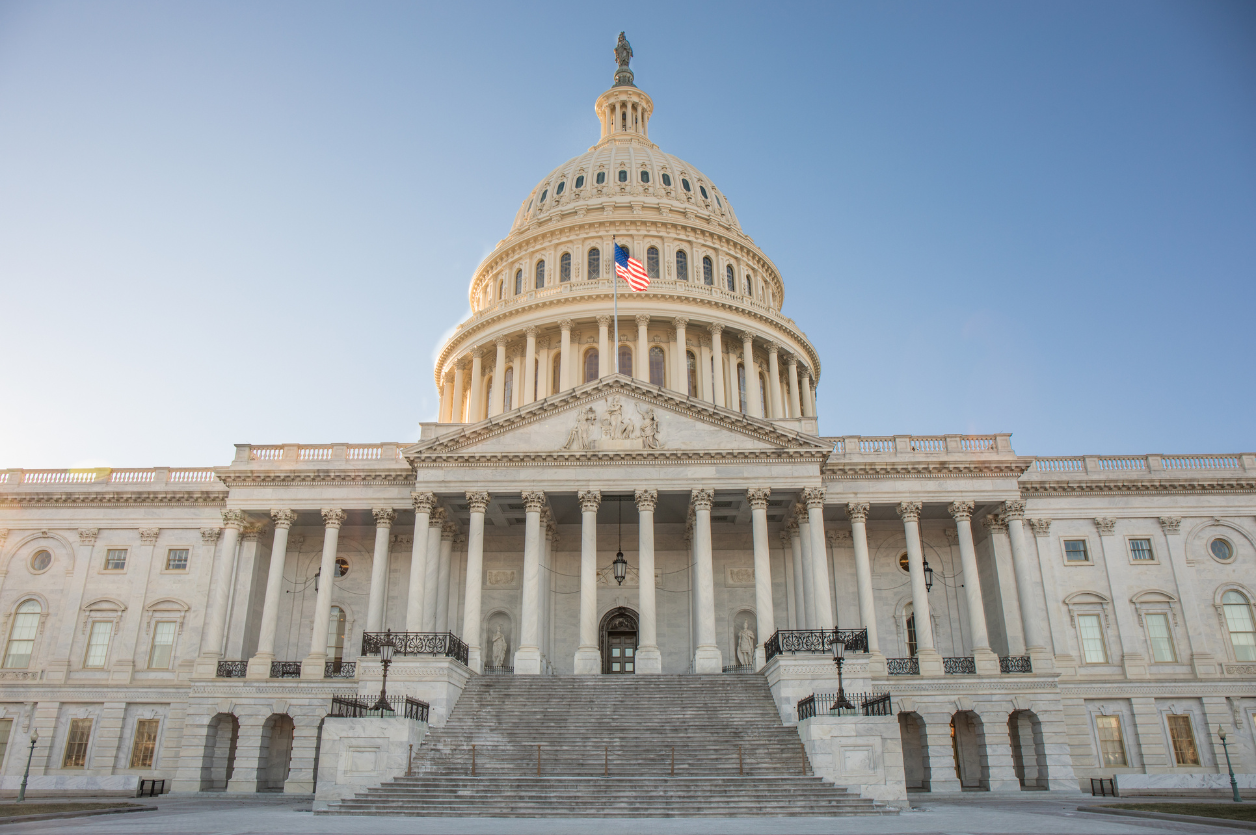
Photo credit: iStock.com/Becky Wright
Intelligence Summary
Late on November 10, 2025, the United States Senate voted to advance a bipartisan stopgap bill aimed at ending the longest government shutdown in American history. The shutdown is now in its 42nd day since beginning on October 1. The bill now heads to the House of Representatives, where it faces a vote expected within days. If approved, it would then require the signature of President Trump before federal operations can resume.
The 60–40 vote reflected a rare bipartisan coalition, with seven Democratic senators, and one Independent senator, joining Republicans to advance the stopgap funding bill. The measure funds the government through January 30, 2026, and includes full-year appropriations for the Department of Agriculture, the Food and Drug Administration, military construction, veterans affairs, and congressional operations.
The bill restores pay for approximately 1.4 million federal employees who had been furloughed or working without pay and reinstates the Supplemental Nutrition Assistance Program (SNAP), which supports 42 million low-income Americans. It also guarantees back pay for federal workers and extends food aid through September 2026. However, the legislation does not immediately renew Affordable Care Act (ACA) subsidies that benefit 24 million Americans, instead, it includes an agreement for a separate vote on the issue in December. Without renewal, the Kaiser Family Foundation estimated that premiums could double in 2026, and the Congressional Budget Office projected that 15 million people could lose coverage by 2034.
The shutdown’s economic and social toll are severe. The Congressional Budget Office estimated $16 billion in lost wages for furloughed workers thus far, and economists projected a 1.5 percent reduction in quarterly GDP. Air travel is disrupted nationwide, with the Federal Aviation Administration cutting 10 percent of flights due to staff shortages, and more than 2,400 flights canceled on November 10 alone. Food assistance programs were suspended, and the Trump administration ordered states to halt SNAP payments, prompting multiple lawsuits.
The administration’s handling of SNAP has become a major legal and political issue for Americans. After lower courts ordered full funding of the program, the Trump administration appealed to the Supreme Court to keep payments frozen, arguing that judicial intervention infringed on executive spending powers. The high court temporarily upheld the freeze, leaving millions without benefits in several states, while others received partial or full payments depending on state-level decisions.
The shutdown has also delayed more than $5 billion in weapons transfers to NATO allies and Ukraine, including AMRAAM and HIMARS missile systems, and some of the State Department staff responsible for export approvals were furloughed. The delays affected deliveries to Denmark, Croatia, and Poland, which were expected to transfer some of the systems to Ukraine. The White House and State Department exchanged blame over the issue, with officials warning that the lapse harmed both U.S. industry and allied defense readiness.
Financial markets responded sharply, likely due to the signs of a potential resolution. Global equities surged on November 11, with the S&P 500 futures up 0.9 percent and the Nasdaq 100 up 1.4 percent in premarket trading. European and Asian markets followed, with the Stoxx 600 gaining 1.4 percent and Japan’s Nikkei 225 rising 1.3 percent. Bond yields rose modestly, gold prices increased by 2 percent, and oil prices climbed 0.8 percent as investors anticipated renewed government spending and data releases.
Why it Matters
The 2025 U.S. government shutdown and its potential resolution reveal deep structural vulnerabilities in American governance that carry global implications. The 42-day funding lapse disrupts critical domestic functions and exposes the fragility of U.S. fiscal management at a time of heightened geopolitical tension. The partial reopening through the use of a stopgap measure until January 30, 2026, signals that the underlying partisan divisions remain unresolved, raising the risk of renewed instability early next year.
From a strategic perspective, the shutdown’s impact on defense logistics and foreign military sales illustrates how domestic political paralysis can undermine U.S. credibility as a security guarantor. The $5 billion delay in weapons transfers to NATO allies and Ukraine disrupts the flow of advanced munitions such as AMRAAM and HIMARS systems, directly affecting deterrence dynamics in Eastern Europe. These delays coincided with intensified Russian offensives, amplifying perceptions among allies that U.S. political dysfunction could weaken collective defense commitments.
The shutdown also constrains U.S. diplomatic bandwidth. With key State Department personnel furloughed, Washington’s ability to engage in crisis diplomacy, sanctions enforcement, and intelligence coordination is reduced. This vacuum provides opportunities for rival powers to advance their agendas, particularly as China and Russia deepened bilateral coordination and as European partners faced uncertainty over U.S. reliability.
Economically, the Senate’s vote to advance a bipartisan stopgap bill triggered a short-term market rally, but the seemingly unresolved underlying fiscal instability may erode investor confidence in U.S. governance. The increase in equities and commodities reflected relief rather than structural optimism. The episode reinforced concerns about the politicization of fiscal policy and the potential for future disruptions to data collection, regulatory oversight, and defense procurement. The Federal Reserve’s policy decisions were also complicated by the absence of official economic data created by the shutdown, resulting in a “data fog” that hinders monetary planning.
Domestically, the political consequences are profound. The bipartisan coalition that voted in favor of the stopgap bill fractured Democratic unity and exposed internal divisions over healthcare policy. The decision to postpone action on ACA subsidies created tension within the Democratic party, frustrating progressive lawmakers and governors who favor maintaining full coverage support. Some analysts have expressed concern that the delay will set a precedent for future social program budget negotiations. The Supreme Court’s temporary freeze on SNAP benefits heightened concern among advocacy groups and affected states, as roughly one in eight Americans rely on the program, highlighting the judiciary’s increasing influence in fiscal disputes.
Globally, the shutdown’s ripple effects reach financial markets, energy trade, and defense supply chains. The temporary halt in U.S. government operations delays regulatory approvals for energy exports and defense contracts, affecting global supply stability. The episode also demonstrates how U.S. domestic politics can shape global economic systems, influencing commodity prices, currency movements, and investor sentiment across continents.
In strategic terms, the 2025 shutdown exemplifies how domestic political dysfunction can undermine a global power’s external posture. The combination of fiscal paralysis, legal confrontation, and executive overreach weakens the perception of U.S. institutional resilience. For adversaries, it provides evidence that domestic polarization can be exploited to constrain U.S. global leadership. For allies, it reinforces the need to diversify security and economic dependencies.
Key Actors
- United States - Financial markets and global investors