Venezuela's Earthquake Tests Fragile Governance
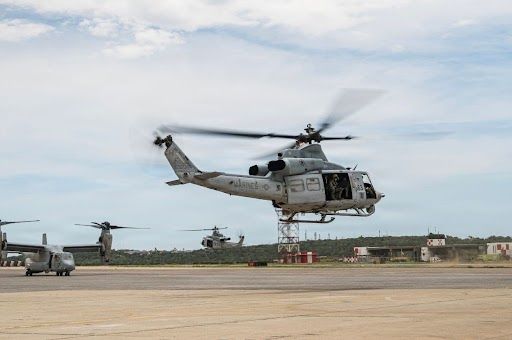
Photo credit: Tech. Sgt. Devin M. Rumbaugh, U.S. Air Force.
Intelligence Summary
Twin earthquakes struck Venezuela on June 24, 2026, devastating coastal regions such as La Guaira and Caracas and leaving at least 1,700 people dead, more than 5,000 injured, and tens of thousands missing. The United Nations announced the delivery of 10,000 body bags, indicating expectations of a higher death toll. Approximately 12,700 people were displaced, and more than 770 buildings collapsed, with rescue operations continuing amid aftershocks, including a 4.6-magnitude tremor north of Caracas on June 29. Interim President Delcy Rodríguez declared a state of emergency and appealed for international assistance, but her government faced mounting criticism for what observers described as a slow and inadequate response.
International aid arrived rapidly. The United States doubled its assistance to $300 million, deploying four search-and-rescue teams, military aircraft, and the USS *Fort Lauderdale* to support logistics and repair the damaged La Guaira port. The European Union pledged €5 million in emergency aid and organized a humanitarian air bridge carrying 50 tons of shelter and sanitation supplies from Copenhagen, with technical teams from 14 EU member states. China contributed 100 million yuan ($14.7 million) in emergency supplies, while India launched Operation Amistad, deploying two C-17 Globemaster III aircraft carrying 66 tons of aid and a modular field hospital capable of treating 200 patients. The Indian Air Force described the 14,000-kilometer transoceanic deployment as a reaffirmation of India’s role as a first responder.
Despite the influx of aid, domestic frustration grew. Reports described Venezuelan civilians digging through rubble with bare hands while the military focused on controlling access to disaster zones rather than assisting in rescue operations. Social media users accused authorities of obstructing foreign rescue teams, including Colombian firefighters detained at Caracas airport. In some areas, residents broke through security cordons to reach affected zones. Rodríguez’s visits to disaster sites were met with public anger, reflecting deep mistrust of the ruling United Socialist Party of Venezuela.
The crisis also exposed structural weaknesses in Venezuela’s governance. Analysts attributed the poor response to years of economic mismanagement, corruption, and sanctions that eroded emergency services and infrastructure. The earthquakes struck only six months into Rodríguez’s presidency, following the January 2024 U.S. operation that captured former President Nicolás Maduro on drug trafficking charges. Rodríguez, once Maduro’s deputy, has struggled to gain legitimacy, balancing cooperation with Washington against skepticism from her own party. Opposition leader María Corina Machado sought to return from exile, but political transition discussions were overshadowed by the humanitarian emergency.
In South Africa, President Cyril Ramaphosa warned against vigilantism ahead of nationwide anti-immigrant protests scheduled for June 30. He acknowledged public frustration over illegal immigration but emphasized that enforcement must remain within constitutional limits. Ramaphosa compared current anti-migrant activism to apartheid-era pass laws, warning that private citizens cannot assume law enforcement powers. The protests, organized by groups demanding stricter border control, prompted thousands of undocumented migrants to flee the country. The president pledged reforms to strengthen border management and combat corruption in immigration services while protecting lawful foreign residents.
In Iraq, Prime Minister Ali al-Zaidi launched a sweeping anti-corruption campaign ahead of his planned visit to Washington. Security forces, including elite Counter-Terrorism Service units, arrested 47 officials, among them Deputy Oil Minister Ali Maarej and Sunni political leader Muthanna al-Samarrai. The Federal Commission of Integrity confirmed that the arrests were based on judicial warrants related to misappropriation of public funds. U.S. sanctions had previously accused Maarej of diverting Iraqi oil to benefit Iran and its militias. The crackdown coincided with Iranian Foreign Minister Abbas Araghchi’s visit to Baghdad, where he discussed regional stability and bilateral cooperation. Former Prime Minister Nouri al-Maliki publicly endorsed the campaign, calling it a long-awaited step toward accountability.
Why it Matters
The Venezuelan earthquakes have transformed a long-standing political and economic crisis into a test of state legitimacy and international alignment. The disaster response has become a proxy for evaluating the Rodríguez government’s capacity to govern after years of institutional decay. The arrival of U.S. Marines, naval assets, and humanitarian aircraft marks a significant re-entry of American influence in a country that was previously aligned with anti-U.S. blocs. The U.S. decision to double aid to $300 million and deploy military logistics assets demonstrates a dual-use approach: humanitarian assistance coupled with strategic re-engagement in Latin America. This may reshape regional alignments, particularly as China and India also assert their presence through aid and infrastructure support.
India’s Operation Amistad illustrates New Delhi’s growing ambition to act as a global humanitarian power. The deployment of advanced BHISHM modular field hospitals and long-range airlift assets highlights India’s expanding expeditionary capability and its interest in cultivating goodwill in Latin America, a region traditionally outside its strategic sphere. The operation also reinforces India’s image as a reliable partner in crisis response, complementing its broader energy diplomacy with Venezuela.
China’s and the EU’s aid contributions reflect a competitive humanitarian environment where major powers use disaster relief to project soft power and secure influence over Venezuela’s reconstruction. The EU’s use of its Copernicus satellite system to map damage underscores the integration of space-based intelligence into humanitarian operations, while China’s financial aid signals continued interest in maintaining access to Venezuelan energy resources.
Domestically, the Venezuelan military’s limited participation in rescue operations contrasts sharply with its previous political role, suggesting a recalibration of civil-military relations. The government’s control over access to disaster zones and restrictions on NGOs indicate continued securitization of civic space. The crisis could either consolidate Rodríguez’s authority through control of aid distribution or accelerate political fragmentation if public anger deepens.
In South Africa, the anti-immigrant protests highlight the intersection of domestic insecurity and regional migration pressures. Ramaphosa’s invocation of apartheid-era imagery underscores the potential for social unrest to erode democratic norms. The exodus of undocumented migrants could destabilize neighboring states, particularly Zimbabwe and Mozambique, by straining border economies and remittance flows. The protests also expose vulnerabilities in South Africa’s governance, where populist movements exploit economic grievances to challenge state authority.
Iraq’s anti-corruption campaign demonstrates how internal governance reforms can serve external diplomatic objectives. The timing of the arrests before al-Zaidi’s U.S. visit suggests an effort to signal alignment with Western expectations of transparency and anti-Iranian positioning. The detention of officials accused of facilitating Iranian oil exports aligns with U.S. sanctions enforcement and may strengthen Baghdad’s leverage in negotiations with Washington. However, the simultaneous visit of Iran’s foreign minister indicates Baghdad’s attempt to balance between U.S. and Iranian influence. The use of elite counterterrorism units for domestic arrests also reflects the militarization of governance and the blurred line between internal security and political control.
Collectively, these developments illustrate how domestic crises, such as natural disasters, social unrest, and anti-corruption drives, can have cascading international effects. They reveal how major powers exploit humanitarian and governance vacuums to project influence, how internal instability can reshape regional migration and security dynamics, and how states under pressure use reform or crisis management to recalibrate their foreign alignments.
Stay Informed. Stay Ahead.