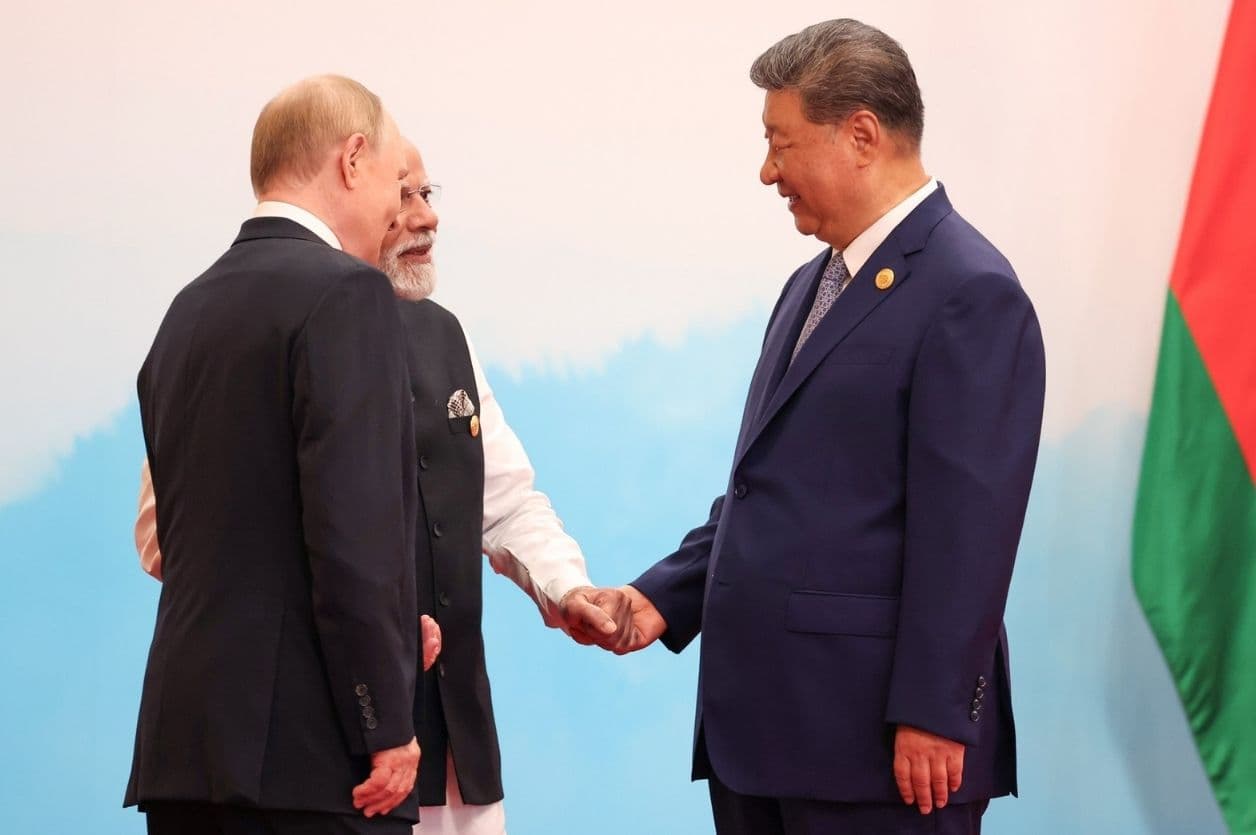
The Bishkek summit gives China and Russia a forum to demonstrate that they retain broad diplomatic access across Eurasia despite conflict with the United States and its partners. For Beijing, convening leaders around security, development, and connectivity reinforces its economic role in Central Asia and supports its preference for institutions less dominated by Western states. For Moscow, visible engagement with China, India, Iran, and Central Asian states helps counter perceptions of isolation linked to the Ukraine war and sanctions pressure. Their shared interest in a less US-centered order does not, however, make the SCO a unified anti-Western alliance.
India is the principal constraint on deeper SCO political alignment. New Delhi seeks access and influence in Central Asia, continued defense and energy ties with Russia, and channels for managing its difficult relationship with China. At the same time, Modi's call for an end to the Ukraine war reflects India's effort to avoid adopting Moscow's position fully, while its participation in the Quad preserves a separate relationship with Washington. India therefore gives the SCO greater geopolitical weight but also limits its ability to become a cohesive China-Russia bloc.
The economic agenda reflects a practical response to disrupted maritime commerce. Conflict-related pressure on the Strait of Hormuz and Red Sea routes has increased the value of overland and Arctic alternatives linking Asian, Middle Eastern, and European markets. Progress on financing institutions or transport corridors could provide members with more options for trade settlement, investment, and freight movement outside Western-led structures. Yet the summit's influence will depend on whether states produce funding commitments, operating arrangements, and commercially viable routes and not just broad declarations.
The meeting also illustrates how U.S. economic pressure can create convergence among countries with otherwise competing interests. China faces renewed U.S. criticism over its trade surplus, while Russia, Iran, and China face varying forms of Western pressure. These conditions make discussions of alternative financial and energy arrangements more attractive. However, unresolved India-China border issues, India-Pakistan tensions, differing views on Ukraine, and India's ties with Israel and the United States will continue to restrict collective action. The most consequential indicators will be concrete decisions on SCO financing, transport infrastructure, and whether bilateral diplomacy produces sustained improvement in India-China and India-Russia coordination.